The second week of September brings about a lot of change. With the passing of Labor Day, Summer winds down and Fall looms around the corner with cooler temperatures and colorful leaves. Helllooooo flannel! Students and teachers begin another year of school (or their first year), ushering in a variety of emotions amongst both children and parents. And we welcome back American football. So long Sunday afternoons...
This time of the year also resurrects some unforgettable experiences. 14 years ago on September 8, 2001, I witnessed my first Red Sox-Yankees game in Yankee Stadium. As a newly appointed Red Sox fan and growing sports enthusiast, this was the ultimate sports experience. Along with 3 other friends and their dads, my father and I made the drive down to New York City for two nights, lodging at the Marriott Twin Towers. Three days later, as I sat in my 7th grade Social Studies teacher Mrs. Streb's class at 9:00 in the morning, I watched as that hotel, the well-known towers that surrounded it, and the pentagon were attacked by al-Qaeda, resulting in the death of nearly 3,000 innocent people.
Yesterday marked the 14th anniversary of 9/11, and today, 9/12, I hit the 1-year mark as a Returned Peace Corps Volunteer (RPCV). These types of events, both positive and negative, and their anniversaries provide an opportunity for reflection and change in our own lives and the world we live in. Specifically, 9/11 gave Americans a chance to unite together, to adapt, to "never forget," and to recognize the tremendous everyday sacrifice of our service men and women.
Peace Corps, in some ways, afforded me the same. As an RPCV, I've been challenged this past year to adapt and reintegrate myself into Western life while simultaneously finding the next part of my camino. The best part about this time: the opportunity to listen and observe family, friends, media, etc. to inform my own opinions and decisions. This is a daily challenge as we often become consumed by our innate busyness. Coincidentally, our failure as individuals and as a society to listen and observe has led to more division than unity...14 years after 9/11, one of the greatest opportunities in American history to create and define our unum.
Saturday, September 12, 2015

Sunday, June 21, 2015
Enough is enough
It is unfortunate how it sometimes takes death to remind us to cherish life. While certainly not an isolated incident, the nine lives taken in Charleston, SC on the night of July 17, 2015 are a vivid reminder of the inner problems we as individuals and as a country still face. Despite the words we write or conversations we have, little change has occurred as many of the same issues we've dealt with for centuries are repeatedly slapping us in the face. Will we continue to hide, sticking with the status quo and anxiously expecting someone else to fix them? Or will we proactively seek solutions on an individual and societal level, thereby putting the interests of humanity before our own?
Either way, it's time for a serious self-examination. We cannot continue to label ourselves by race, sex, religion, or political affiliation. While all of these help to define us and in some way strive to unite, more often they end up tearing us apart, creating arguments where there should be dialogues. Instead, we can utilize our intellect and gifts as human beings (i.e. communication, education, critical and rational thinking, love, respect, empathy) to facilitate change and recognize that we are all equal. We are ONE. That knowledge is more powerful and unifying than anything.
Either way, it's time for a serious self-examination. We cannot continue to label ourselves by race, sex, religion, or political affiliation. While all of these help to define us and in some way strive to unite, more often they end up tearing us apart, creating arguments where there should be dialogues. Instead, we can utilize our intellect and gifts as human beings (i.e. communication, education, critical and rational thinking, love, respect, empathy) to facilitate change and recognize that we are all equal. We are ONE. That knowledge is more powerful and unifying than anything.
Wednesday, June 17, 2015
Simplicity
We live in a busy world. High speed, high intensity. High stress. It seems everything is go, go, go 24/7/365, leaving us little time to "sit back and smell the roses." Taking a break might mean someone else jumping in front of you, whether that be at the supermarket, at your job, or on the court. I've grown accustomed to this life as it is what I grew up in. Consciously or subconsciously, social and cultural norms are affecting our day-to-day thoughts and actions. And they are constantly evolving as we ourselves are. Beautiful, yet at times, terrifying.
Take a look at TV commercials for example. An advertisement by Coca-Cola or Coors may entice us to go to the fridge and grab one. Same is true for movies and popcorn, two words that go hand-in-hand. Even if we're not at the theater, we often feel the need to make popcorn when watching a movie from the comforts of our own home.
Take a look at TV commercials for example. An advertisement by Coca-Cola or Coors may entice us to go to the fridge and grab one. Same is true for movies and popcorn, two words that go hand-in-hand. Even if we're not at the theater, we often feel the need to make popcorn when watching a movie from the comforts of our own home.
While I do appreciate the busyness, I have had a few moments since returning to the US where I long for Peace Corps simplicity. As an outsider, I was originally unaware of many Philippine social and cultural norms and in some cases, they didn't apply. This may sound strange, but there is a sense of freedom that you have as a foreigner. I was oblivious to this freedom in the moment, but I recognize it now that I have returned to the US. The freedom from your own norms and from the restrictions we place on ourselves. The removal of these norms and distractions allowed me to focus on what I value and craft my own personal ideology that I can turn to amidst the busyness.
Sunday, January 25, 2015
All you need is LOVE
The past month has been...well...slightly chaotic to put it best. Between the holiday season, family get togethers (and sickness), the passing of a loved one, New Years, and a move down south, my life has been GO GO GO (I haven't had time to stop to collect my $200). But in the middle of the chaos, I found peace with one imagine. One moment that I will have forever.
The passing of my grandfather on December 30th brought both sadness and joy to my life. It is never easy to say goodbye to a loved one, but it is made easier by remembering the ways in which they touched your life. And by celebrating theirs.
I am so thankful for the time I had with my grandfather throughout the years, but perhaps the best time we had together was since I've returned from the Philippines these past few months. The most precious moments to us are often defined by the unseen. No one else can witness a moment exactly from our vantage point. That's what makes them so special and unique. Because they are our own.
The love my grandparents have for one another is well-known. But seeing them continue to live through one another, in sickness and in health, is beyond words. Their love is the epitome of what love is, and I will always try to live by their example.
Genuine. Expressive. Emotional. Unwavering. Unconditional.
Love. Share it.
Friday, December 19, 2014
Returned (R)
September 29, 2014 approx. 11:00 PM EST - My feet were once again firmly planted on US soil. I still might have been speaking Tagalog (due to some of our new Fil-Am friends on the plane), but as I ventured through the San Francisco airport, I was overwhelmed with happiness. Verizon signal returned. English was ringing in my ears. But the first thing that completely blew my mind: drinking fountains!
For nearly two months, my post-Close of Service (COS) travels took me to remote spots in the Philippines (the adventurous island of Siargao and the rugged Cordillera mountain provinces; I can now say I have two additional tattoos this year, both tribal) and an American cross-country BROad trip with two of my closest friends. I've been able to see many family and friends since my return, sharing countless stories and pictures. But to be completely honest (and maybe you could tell from my last post), I had not planned on continuing this blog. It wasn't until I became a dependent again (for two months) and holed myself up at my parents' home that I realized the profound effect my writing had on me and others since I began in June 2012. I was never sure where to begin, but the freedom of expression transformed itself as I put finger to keyboard.
The title of this blog, Finding My Camino, is indicative of something that doesn't end, but evolves and adapts. And such is life. A never-ending road of twists and turns. We are continually finding ourselves. So as I returned home after close to two and a half years, I need to heed the words that I wrote in my last post: "My road isn't ending...only continuing." I hope to demonstrate that through everyday action, but also by sharing my ongoing growth process with you through words.

This entry itself has been evolving for weeks. I've had so many thoughts and emotions running through me as I transition back into US life that it was hard to know where to begin. The mind often becomes overexerted (causing me to overthink), but at the same time, I have found that this is a tremendous time in my life for new knowledge and mental expansion. Perhaps that is just the transitional point I now find myself in though: the so-to-speak "real world" awaits in the next few months.
On the plus side, I never found myself completely overwhelmed after returning. Despite hearing stories about going into COSTCO or Wal-Mart again and being blown away, it was more of the little things I never thought to think about before that struck me (i.e. drinking fountains; free access to safe drinking water!!??). Living in the Philippines gave me a broader perspective on the world we live in and taught me how to get by with less. To see the accessibility and consumptive practices we have here is incredible. I walked into Pottery Barn the other day and thought to myself, "who really needs a new set of dishes with Rudolph on them? Are you ever going to use them any other time of year?" Now, obviously some people feel compelled to buy such things, but the question I am now asking myself is DO I REALLY NEED THAT?
One of the most challenging things for me has been trying to get back in touch and familiarize myself with people again. Connecting through Skype, Facebook, emails, etc. while overseas isn't the same as face-to-face interaction. Just as many friends or family may pick up on changes in me, in some ways it feels like I am just meeting them all over again. That's often relieving though because it makes the conversation real. We commonly engage in small-talk, whether it be at a holiday party or family reunion, asking the same questions over and over. But do we really care about the answers? Or are the conversations superficial, ones that simply act as a time-fillers or nice gestures? I acknowledge that this depends from person-to-person. Comfortability is key. I'm not going to divulge the same amount of detail on a particular topic with a new acquaintance as maybe I would with my mother. But I also feel that we shouldn't need to hide behind masks instead of being our true selves. Don't be afraid to speak your mind or have an in-depth conversation. Good and bad timing is fickle. If the opportunity presents itself and you feel comfortable, go for it.

For nearly two months, my post-Close of Service (COS) travels took me to remote spots in the Philippines (the adventurous island of Siargao and the rugged Cordillera mountain provinces; I can now say I have two additional tattoos this year, both tribal) and an American cross-country BROad trip with two of my closest friends. I've been able to see many family and friends since my return, sharing countless stories and pictures. But to be completely honest (and maybe you could tell from my last post), I had not planned on continuing this blog. It wasn't until I became a dependent again (for two months) and holed myself up at my parents' home that I realized the profound effect my writing had on me and others since I began in June 2012. I was never sure where to begin, but the freedom of expression transformed itself as I put finger to keyboard.
The title of this blog, Finding My Camino, is indicative of something that doesn't end, but evolves and adapts. And such is life. A never-ending road of twists and turns. We are continually finding ourselves. So as I returned home after close to two and a half years, I need to heed the words that I wrote in my last post: "My road isn't ending...only continuing." I hope to demonstrate that through everyday action, but also by sharing my ongoing growth process with you through words.
This entry itself has been evolving for weeks. I've had so many thoughts and emotions running through me as I transition back into US life that it was hard to know where to begin. The mind often becomes overexerted (causing me to overthink), but at the same time, I have found that this is a tremendous time in my life for new knowledge and mental expansion. Perhaps that is just the transitional point I now find myself in though: the so-to-speak "real world" awaits in the next few months.
On the plus side, I never found myself completely overwhelmed after returning. Despite hearing stories about going into COSTCO or Wal-Mart again and being blown away, it was more of the little things I never thought to think about before that struck me (i.e. drinking fountains; free access to safe drinking water!!??). Living in the Philippines gave me a broader perspective on the world we live in and taught me how to get by with less. To see the accessibility and consumptive practices we have here is incredible. I walked into Pottery Barn the other day and thought to myself, "who really needs a new set of dishes with Rudolph on them? Are you ever going to use them any other time of year?" Now, obviously some people feel compelled to buy such things, but the question I am now asking myself is DO I REALLY NEED THAT?
One of the most challenging things for me has been trying to get back in touch and familiarize myself with people again. Connecting through Skype, Facebook, emails, etc. while overseas isn't the same as face-to-face interaction. Just as many friends or family may pick up on changes in me, in some ways it feels like I am just meeting them all over again. That's often relieving though because it makes the conversation real. We commonly engage in small-talk, whether it be at a holiday party or family reunion, asking the same questions over and over. But do we really care about the answers? Or are the conversations superficial, ones that simply act as a time-fillers or nice gestures? I acknowledge that this depends from person-to-person. Comfortability is key. I'm not going to divulge the same amount of detail on a particular topic with a new acquaintance as maybe I would with my mother. But I also feel that we shouldn't need to hide behind masks instead of being our true selves. Don't be afraid to speak your mind or have an in-depth conversation. Good and bad timing is fickle. If the opportunity presents itself and you feel comfortable, go for it.
Thursday, August 28, 2014
Freedom
It has been a pleasure being able to put my thoughts to keyboard and sharing them with you, my readers, these past 27 months. I struggled with journaling in the past, never really seeing the point. But through journaling and blogging throughout my Peace Corps tenure, I have found a new way of expressing myself, releasing stress, and sharing my vantage point with the world.
I've spent the past few minutes rereading through some of my old posts (making sure I don't restate previous thoughts :), prompting further reflection of my PC experience. I have loved this "era" of my life because it has allowed me to do something different. To be someone different. I never thought of myself as crazy or mad before, but that is essentially an unwritten requirement for Peace Corps. Being comfortable with yourself to take the "road less traveled," and defy conventional wisdom.
So thank you for reading these words. I would love to believe that I have led to a new understanding and appreciation of Filipino culture, Peace Corps, or life in general through my writings. That is, after all, one of the Peace Corps goals: to promote a better understanding of Filipinos on the part of Americans. But I like to think that I have awakened a new part of myself, a sense of freedom... of expression... emotion... free to explore life. My road isn't ending...only continuing. See you soon!
I've spent the past few minutes rereading through some of my old posts (making sure I don't restate previous thoughts :), prompting further reflection of my PC experience. I have loved this "era" of my life because it has allowed me to do something different. To be someone different. I never thought of myself as crazy or mad before, but that is essentially an unwritten requirement for Peace Corps. Being comfortable with yourself to take the "road less traveled," and defy conventional wisdom.
So thank you for reading these words. I would love to believe that I have led to a new understanding and appreciation of Filipino culture, Peace Corps, or life in general through my writings. That is, after all, one of the Peace Corps goals: to promote a better understanding of Filipinos on the part of Americans. But I like to think that I have awakened a new part of myself, a sense of freedom... of expression... emotion... free to explore life. My road isn't ending...only continuing. See you soon!
Wednesday, August 20, 2014
Staying in the moment
Wrapping up service causes volunteers to think about what life will be like back home, what questions we will be asked, how things have changed (both internally and externally) over 2 years, how people have changed, etc. Emotional for sure and difficult to put into words. Two years is long no matter where you are, and so much happens within that time. I do not expect each person to express interest in every detail of my service, just as I probably won't want to hear every bit about their past two years, because everyone is different. That isn't meant to project negativity but reality. So in writing this post, I want to share some of my most important observations because I believe they correspond to more than just my experience, but transcend life in general.
Stay in the moment. If there is one thing I have learned throughout my Peace Corps service, this would be it. I have said it time and time again throughout this blog, but it has become even more noticeable for me as my service comes to a close. There is so much to look forward to in the next few months: travel plans, my ongoing reunion with family and friends, home cooked meals, Chipotle burritos, craft beers, falling leaves, snow, holidays, the smell of a bonfire or Christmas tree. I could go on and on. As I think of these things combined with the emotions that seem to be inescapable upon return, I try and remind myself that I am still here in the Philippines. That I still have 3 weeks left before my COS. If we are in a rush to move on to future activities, we will never be able to appreciate those in front of us. Enjoy the moments, or as I recently heard "let the moments seize you."
Observing changes through a screen. Though I haven't had a face-to-face connection with friends and family (aside from my parents) in over 2 years, it has been amazing to see their changes through a computer screen. Whether it's a Facebook message, pictures, employment updates, or a Skype call, I've been able to be a part of a life-changing event (i.e. wedding announcement), vacation, new job, or just personal maturation. These moments have allowed me to stay connected while observing from a far. A truly unique and invaluable perspective.
Planning isn't everywhere. The Philippines has forced me to live and plan on a day-to-day basis (outside of my personal travel). Filipinos think on a daily or monthly basis, not annually. When asking someone how much they make, a response might be "10,000 pesos/month," not "120,000 pesos/year." This principal carries over into all facets of living and stands in stark contrast to how we operate in America. The concept of planning ahead isn't seen as important because in many cases, people are trying to make ends meet daily.
Stay open minded. Part of being a Peace Corps volunteer is sharing American culture with locals, while also learning about theirs and sharing it with the world (what I hope I have done through this blog). As someone who has had the opportunity to travel, interact with locals and form relationships, and see some incredible sights, it's extremely difficult not to generalize. It's natural to gauge an outsider's perceptions of your country by asking "what do you think of (i.e. the Philippines, America)?" On the flip side, sharing your own perceptions of your country with an outsider is just as hard because of the diversity that exists in our world. I can share my thoughts and experiences of America with Filipinos, but they are commonly understood as "this is what Americans are like," not "this is what (i.e. Rochester, New York, South Carolina) is like." The same applies to the Philippines. I have spent the majority of my time here in the Bicol region, so naturally, most of my observations are related to the people/my experiences there, not the country as a whole. Being able to hold back judgement while continuing to observe and engage is key, especially when finding yourself in a foreign environment.
Stay in the moment. If there is one thing I have learned throughout my Peace Corps service, this would be it. I have said it time and time again throughout this blog, but it has become even more noticeable for me as my service comes to a close. There is so much to look forward to in the next few months: travel plans, my ongoing reunion with family and friends, home cooked meals, Chipotle burritos, craft beers, falling leaves, snow, holidays, the smell of a bonfire or Christmas tree. I could go on and on. As I think of these things combined with the emotions that seem to be inescapable upon return, I try and remind myself that I am still here in the Philippines. That I still have 3 weeks left before my COS. If we are in a rush to move on to future activities, we will never be able to appreciate those in front of us. Enjoy the moments, or as I recently heard "let the moments seize you."
Observing changes through a screen. Though I haven't had a face-to-face connection with friends and family (aside from my parents) in over 2 years, it has been amazing to see their changes through a computer screen. Whether it's a Facebook message, pictures, employment updates, or a Skype call, I've been able to be a part of a life-changing event (i.e. wedding announcement), vacation, new job, or just personal maturation. These moments have allowed me to stay connected while observing from a far. A truly unique and invaluable perspective.
Planning isn't everywhere. The Philippines has forced me to live and plan on a day-to-day basis (outside of my personal travel). Filipinos think on a daily or monthly basis, not annually. When asking someone how much they make, a response might be "10,000 pesos/month," not "120,000 pesos/year." This principal carries over into all facets of living and stands in stark contrast to how we operate in America. The concept of planning ahead isn't seen as important because in many cases, people are trying to make ends meet daily.
Stay open minded. Part of being a Peace Corps volunteer is sharing American culture with locals, while also learning about theirs and sharing it with the world (what I hope I have done through this blog). As someone who has had the opportunity to travel, interact with locals and form relationships, and see some incredible sights, it's extremely difficult not to generalize. It's natural to gauge an outsider's perceptions of your country by asking "what do you think of (i.e. the Philippines, America)?" On the flip side, sharing your own perceptions of your country with an outsider is just as hard because of the diversity that exists in our world. I can share my thoughts and experiences of America with Filipinos, but they are commonly understood as "this is what Americans are like," not "this is what (i.e. Rochester, New York, South Carolina) is like." The same applies to the Philippines. I have spent the majority of my time here in the Bicol region, so naturally, most of my observations are related to the people/my experiences there, not the country as a whole. Being able to hold back judgement while continuing to observe and engage is key, especially when finding yourself in a foreign environment.
Wednesday, July 30, 2014
Whirlwind...literally!
My time grows thin here in the Philippines. Close of Service (COS) is upon us, with our wrap-up conference next week in Bohol and my COS date set for September 12. And as of yesterday, my stateside arrival is set for September 29! Apologizes for not writing these past few months. My free time/internet availability has been limited, and my mind has been preoccupied elsewhere. But after a wonderful trip up to Northern Luzon, a Special Olympics event...cut short by...Typhoon Glenda, COS Medical, and a bro trip to Ilocos, I find myself in the friendly, air-conditioned confines of the Peace Corps office with ample electricity and internet at my disposal.
To bring you up to speed, June once again marked the start of the rainy season, and in Tabaco, it also marks fiesta season. This year I was a bit more involved as my office invited me to partake in the cultural night, where each LGU office presents a dance number. I was more than happy to join, knowing of course that this meant daily dance practice. As a seasoned veteran, I knew very well that fiesta season means limited trabaho (work), so at least I had something else to occupy my time at the office.

This is not to say my June was a vacation (just wait til I get to July...). Our Save the Rivers, Save the Sea Program was in full swing and we managed to fine tune our needs assessment questionnaire and organize a pre-test before the students surveyed almost 300 participants in 3 barangays. The data encoding process is currently taking place.
The commencement of fiesta coincided with the conclusion of my online economics course. So naturally, relaxation set in...up north :) My new favorite spot in the Philippines, the mountainous provinces of Ifagao, Mountain Province, and Benguet offer a reprieve from the hot and muggy lowlands. Pine trees and rice terraces dot the landscape, and beef and organic produce abound. It was a magical week, even despite the spontaneous rain showers and treacherous bus rides through the mountains.


Just last week, I was able to conclude my travel around the Philippines with a mancation to the far north and the province of Ilocos Norte. Russ, Zac, and Josh brought the laughs, and the 4 of us had a great time celebrating the Camel's 26th birthday while reminiscing about our experiences and making new ones. Highlights included an organic dragonfruit farm, beach lounging and paddle-boarding, and off-road sand duning.

July also brought about the biggest PC event I have ever been a part of. 3 PCVs in Legazpi organized a Special Olympics event for the province featuring close to 300 athletes and over 150 volunteers, including over 40 PCVs! It was a two-day event held at Bicol University, which attracted so much attention that even the U.S. Ambassador made an appearance. For more info and pictures, check out the Facebook page at the link below: https://www.facebook.com/pages/Special-Olympics-Albay/256499864559786.
Sadly, the event was cut short by yet another natural disaster (it seems like they've been never ending since I arrived!). Typhoon Glenda struck around 5 P.M. Tuesday night, bringing heavy rain and strong winds. All volunteers were consolidated once again to hotels in Legazpi. Unfortunately for the Bicol Region, we weren't so fortunate this year. The next day, as we ventured out of the hotel to assess the damage, we were greeted by hundreds of uprooted trees, toppled power lines, and flattened homes. I was fortunate to receive minimal damage to my home, but many others weren't as fortunate. Luckily, few casualties occurred. At this time, we remain without power in Tabaco and current timetables for return vary (lots of tsika-tsika, or gossip). The streets are pitch black at night, while the steady hum of a few generators can be heard in the distance. During these times, Filipinos resort to candles, prayer, and for some, a good ol' tagay (drinking circle). Even in the darkness, sleep is limited as I can feel the sweat slowly trickle down my spine.


It is in these times that I have learned to temper my expectations. My service might conclude in September without power. Some of my projects may be incomplete. That's only reality, and in the developing world, it is important to take everything with a grain of salt and roll with the punches. Situations I previously would have called chaotic or unique now seem normal.
I was reminded last night that my Peace Corps placement here in the Philippines highlighted my strengths and catered to my lifestyle. I have been blessed with the opportunity to serve in a singing, dancing, scuba diving, basketball-loving country whose people welcome you with a smile (and maybe a "Hey Joe..."), a plate full of food, and a conversation in their best English (even though you insist you know Tagalog). Even the day after a typhoon.

To bring you up to speed, June once again marked the start of the rainy season, and in Tabaco, it also marks fiesta season. This year I was a bit more involved as my office invited me to partake in the cultural night, where each LGU office presents a dance number. I was more than happy to join, knowing of course that this meant daily dance practice. As a seasoned veteran, I knew very well that fiesta season means limited trabaho (work), so at least I had something else to occupy my time at the office.
A few of my coworkers and I before our dance routine
This is not to say my June was a vacation (just wait til I get to July...). Our Save the Rivers, Save the Sea Program was in full swing and we managed to fine tune our needs assessment questionnaire and organize a pre-test before the students surveyed almost 300 participants in 3 barangays. The data encoding process is currently taking place.
The commencement of fiesta coincided with the conclusion of my online economics course. So naturally, relaxation set in...up north :) My new favorite spot in the Philippines, the mountainous provinces of Ifagao, Mountain Province, and Benguet offer a reprieve from the hot and muggy lowlands. Pine trees and rice terraces dot the landscape, and beef and organic produce abound. It was a magical week, even despite the spontaneous rain showers and treacherous bus rides through the mountains.
Jackie and I at the famous rice terraces of Batad
Myself, Jackie, and our tour guide
Jackie and I inside the "Big Cave" in Sagada. The sandstone formations, shown, allowed us to walk barefoot for part of the time
Surrounded by the lush green of the rice paddies
Myself, Russ, Zac, and Josh at the La Paz Sand Dunes
July also brought about the biggest PC event I have ever been a part of. 3 PCVs in Legazpi organized a Special Olympics event for the province featuring close to 300 athletes and over 150 volunteers, including over 40 PCVs! It was a two-day event held at Bicol University, which attracted so much attention that even the U.S. Ambassador made an appearance. For more info and pictures, check out the Facebook page at the link below: https://www.facebook.com/pages/Special-Olympics-Albay/256499864559786.
Sadly, the event was cut short by yet another natural disaster (it seems like they've been never ending since I arrived!). Typhoon Glenda struck around 5 P.M. Tuesday night, bringing heavy rain and strong winds. All volunteers were consolidated once again to hotels in Legazpi. Unfortunately for the Bicol Region, we weren't so fortunate this year. The next day, as we ventured out of the hotel to assess the damage, we were greeted by hundreds of uprooted trees, toppled power lines, and flattened homes. I was fortunate to receive minimal damage to my home, but many others weren't as fortunate. Luckily, few casualties occurred. At this time, we remain without power in Tabaco and current timetables for return vary (lots of tsika-tsika, or gossip). The streets are pitch black at night, while the steady hum of a few generators can be heard in the distance. During these times, Filipinos resort to candles, prayer, and for some, a good ol' tagay (drinking circle). Even in the darkness, sleep is limited as I can feel the sweat slowly trickle down my spine.
Still playing 'ball
It is in these times that I have learned to temper my expectations. My service might conclude in September without power. Some of my projects may be incomplete. That's only reality, and in the developing world, it is important to take everything with a grain of salt and roll with the punches. Situations I previously would have called chaotic or unique now seem normal.
I was reminded last night that my Peace Corps placement here in the Philippines highlighted my strengths and catered to my lifestyle. I have been blessed with the opportunity to serve in a singing, dancing, scuba diving, basketball-loving country whose people welcome you with a smile (and maybe a "Hey Joe..."), a plate full of food, and a conversation in their best English (even though you insist you know Tagalog). Even the day after a typhoon.
With a smile :)
Thursday, May 29, 2014
The road ahead
I've been quite reflective these past few weeks as I begin to plan ahead a bit and realistically think about my future post-Peace Corps, and I have begun to reflect back on how I got to this point in the first place. Of course, circumstances and situations have arisen that have given me certain direction (i.e. the email my mother sent me back in the Fall of 2010 which prompted me to research Peace Corps). But digging a bit deeper, it seems to be our innate qualities that cause us to behave in a particular manner, i.e. choose a salad over that ever-tempting cheesecake, or direct us whether or not to pack that umbrella on the slight chance that the cloudy day turns rainy. These qualities help us make decisions, which in turn shape our path in life. How we move forward. And how we utilize our past and present to mold our future.
ANONYMOUS: So why are you thinking about the future when there is so much going on in the present? You're always talking about staying in and embracing the moment, Andrew. Have you given up on your philosophy?
ME: Quite the opposite. I am firmly entrenched where I am right now. But there will always be situations lying ahead that, if unaddressed, will add more stress and chaos to our lives. My reflective state has given me the chance to see things come full circle. Knowing that time is finite, I'm trying to strike a balance and allocate my time in ways that provide me happiness now and put me in a better position to be content down the line. That and a few other reasons:
On an unrelated note, please check out the following link for a project I have coming up with other PCVs this August - Camp BRO: https://fundly.com/leadership-camp-for-young-men-in-the-philippines
ANONYMOUS: So why are you thinking about the future when there is so much going on in the present? You're always talking about staying in and embracing the moment, Andrew. Have you given up on your philosophy?
ME: Quite the opposite. I am firmly entrenched where I am right now. But there will always be situations lying ahead that, if unaddressed, will add more stress and chaos to our lives. My reflective state has given me the chance to see things come full circle. Knowing that time is finite, I'm trying to strike a balance and allocate my time in ways that provide me happiness now and put me in a better position to be content down the line. That and a few other reasons:
- "Senioritis" - 3-4 months left in my Peace Corps service. Summer in the Philippines (cue brownouts and the monotony/boredom that accompany them). And projects winding down (ironically, I'm busier than ever between the Save the Rivers, Save the Sea Program, an online grad school class, and multiple side projects).
- "The Planner" - Despite my heavy procrastination skills, I'm always planning ahead. This allows me to prepare for the unexpected, which usually occurs a few months down the line (waiting for it...).
- "Within uncertainty lies a degree of certainty" - I feel like someone has said that before, hence the quotes. Although I'm not entirely sure where my life is headed, I know that come January 2015, I will be moving back to Charleston to finish my Master's.
On an unrelated note, please check out the following link for a project I have coming up with other PCVs this August - Camp BRO: https://fundly.com/leadership-camp-for-young-men-in-the-philippines
Monday, May 26, 2014
Connecting to the world
Friday, April 18, 2014
A walk to remember
Being a predominantly Catholic country, the Philippines' Holy Week is one of the busiest times of year. Thousands of people head home to their families, making travel around this time a nightmare. Buses usually sell out a month before, and plane tickets are costly. So instead of throwing myself into the chaos, I decided to reinvest my time, save a few pesos, and stick around Tabaco for the holiday this year.
A local ritual here is a Stations of the Cross walk up the Mayon volcano on Holy Thursday evening/Good Friday morning, starting in the foothills and finishing 12 kilometers later at the Mayon Rest House and Planetarium. In addition to the walk thousands do on their own, there is also a 2 A.M. reenactment of Good Friday (a seemingly more pious tradition), with one person playing the role of Jesus Christ and carrying a wooden cross the whole way up. A few of my close Filipino friends partake in the former every year, and since I was around town, I thought I'd join them. It had always been on my bucket list, and I missed it last year being out of town.
We immediately started out after reaching barangay Buang, much to my confusion since I thought we were going to camp/eat and walk in the early morning. No problem though. To the top we go! Sari-saris dotted the road, selling food, drinks, and for some reason sunglasses (??). People were everywhere. And once again, I was the center of attention. I tried to blend in by sticking with Robert, Mark, and Jhunz, and by listening to music. At the second station, the rains started and the temperature cooled. Rain jacket...check! Ha Ha... Like that was really going to help... We were just getting started.
Flashlights lit the damp and crowded road as we forged ahead, stopping at each station along the way. Even in moments of prayer and solidarity, I found myself being stared (with laughter), gestured, and yelled at. I asked my friends about this later, wondering why I was the object of focus when clearly there was another reason for this journey. But I already knew the answer: "you are a tall, white man, quite possibly the only white person on the walk this year, and many of these people have never seen you before." Still, the blending of social and religious spheres amazed me.
As we made our way closer and closer to our destination, the rain continued intermittently, the air thinned, and a heavy fog set in on our route. Only shadows were visible in the distance. Bird chipping could be heard in the trees, and the coconut fronds swayed and bristled in the wind. The atmosphere made me think of the Garden of Gethsemane, or at least the one I envision. The fog was so thick that only the faint light up ahead indicated we were close. And suddenly, I was stopped dead in my tracks, surrounded my thousands of people. We had made it.
Mass was going on in front of the planetarium, but we made our way around back and up a dirt path to a grassy tract of land where a few of our other friends were already camped. Or so we thought. The rain continued to come down, saturating my already saturated clothes. Let's get in the tent! Slight problem: no tarp for the ground. We did our best to remove the water from the tent floor, and then proceeded to pile 10 of us in the claustrophobic 5x5 space. Quite a bonding experience. Dinner (by flashlight) was served. Drinks were flowing soon after. And the rain continued outside (and inside). Soon, everything was soaked. Thank god for the alcohol. With no real room to sleep, the conversation and laughter continued into the wee hours of the morning. The normally wonderful cool breeze was extra chilly today as I stepped outside to urinate. Shivering and shaking, I made my way back inside the "cozy" tent for a few more hours. Thankfully the rain did manage to keep the mosquitoes at bay.
Light broke around 5:30 and shortly after we began packing up our gear. I was looking forward to the sunrise from the mountain, looking down upon Tabaco, but the cloud cover prevented a breathtaking view this day. Our timing was perfect as we wandered down from our perch, catching the 2 A.M. reenactment as they reached the top. I was too cold to take my camera out for pictures. Only a handful of followers accompanied, I'm sure in large part due to the weather. We paused and silently reflected as they passed before heading home.
Robert asked me on our way back if this was one of the craziest things I'd ever done. Too cold, tired, and possibly still a bit inebriated to muster an emphatic response, I simply nodded. Yes indeed. Crazy and at times miserable. But well worth it :)
A local ritual here is a Stations of the Cross walk up the Mayon volcano on Holy Thursday evening/Good Friday morning, starting in the foothills and finishing 12 kilometers later at the Mayon Rest House and Planetarium. In addition to the walk thousands do on their own, there is also a 2 A.M. reenactment of Good Friday (a seemingly more pious tradition), with one person playing the role of Jesus Christ and carrying a wooden cross the whole way up. A few of my close Filipino friends partake in the former every year, and since I was around town, I thought I'd join them. It had always been on my bucket list, and I missed it last year being out of town.
We immediately started out after reaching barangay Buang, much to my confusion since I thought we were going to camp/eat and walk in the early morning. No problem though. To the top we go! Sari-saris dotted the road, selling food, drinks, and for some reason sunglasses (??). People were everywhere. And once again, I was the center of attention. I tried to blend in by sticking with Robert, Mark, and Jhunz, and by listening to music. At the second station, the rains started and the temperature cooled. Rain jacket...check! Ha Ha... Like that was really going to help... We were just getting started.
Flashlights lit the damp and crowded road as we forged ahead, stopping at each station along the way. Even in moments of prayer and solidarity, I found myself being stared (with laughter), gestured, and yelled at. I asked my friends about this later, wondering why I was the object of focus when clearly there was another reason for this journey. But I already knew the answer: "you are a tall, white man, quite possibly the only white person on the walk this year, and many of these people have never seen you before." Still, the blending of social and religious spheres amazed me.
As we made our way closer and closer to our destination, the rain continued intermittently, the air thinned, and a heavy fog set in on our route. Only shadows were visible in the distance. Bird chipping could be heard in the trees, and the coconut fronds swayed and bristled in the wind. The atmosphere made me think of the Garden of Gethsemane, or at least the one I envision. The fog was so thick that only the faint light up ahead indicated we were close. And suddenly, I was stopped dead in my tracks, surrounded my thousands of people. We had made it.
Mass was going on in front of the planetarium, but we made our way around back and up a dirt path to a grassy tract of land where a few of our other friends were already camped. Or so we thought. The rain continued to come down, saturating my already saturated clothes. Let's get in the tent! Slight problem: no tarp for the ground. We did our best to remove the water from the tent floor, and then proceeded to pile 10 of us in the claustrophobic 5x5 space. Quite a bonding experience. Dinner (by flashlight) was served. Drinks were flowing soon after. And the rain continued outside (and inside). Soon, everything was soaked. Thank god for the alcohol. With no real room to sleep, the conversation and laughter continued into the wee hours of the morning. The normally wonderful cool breeze was extra chilly today as I stepped outside to urinate. Shivering and shaking, I made my way back inside the "cozy" tent for a few more hours. Thankfully the rain did manage to keep the mosquitoes at bay.
Light broke around 5:30 and shortly after we began packing up our gear. I was looking forward to the sunrise from the mountain, looking down upon Tabaco, but the cloud cover prevented a breathtaking view this day. Our timing was perfect as we wandered down from our perch, catching the 2 A.M. reenactment as they reached the top. I was too cold to take my camera out for pictures. Only a handful of followers accompanied, I'm sure in large part due to the weather. We paused and silently reflected as they passed before heading home.
Robert asked me on our way back if this was one of the craziest things I'd ever done. Too cold, tired, and possibly still a bit inebriated to muster an emphatic response, I simply nodded. Yes indeed. Crazy and at times miserable. But well worth it :)
Sunday, March 30, 2014
Save the Rivers, Save the Sea
Conceptualized last summer by myself and my counterpart Dr. Nieves (Dean of Bicol University Tabaco Campus), the Save the Rivers, Save the Sea Program is now in full swing. Former challenges at site (counterpart struggles, election changes, bureaucratic red tape) swayed me to "take my talents to"....Bicol University Tabaco Campus (BUTC), where the program was born. And after months of proposal writing, project approval, budget approval, etc., we were finally cleared for takeoff this past January.
A three-year pilot program of BUTC, Save the Rivers, Save the Sea seeks to address river and habitat sustainability through participatory methods. The first year focuses on the Bombon River, one of the 6 major rivers in Tabaco City which stretches through barangays Tayhi, Pawa, and Bombon. Local youth are our target audience because they hold the cards for our future and we believe it is through them that we will see change and sustainability in local waterways. Aside from myself and 6 BUTC faculty acting as program coordinators, we have assembled a Core Team of committed BUTC students to assist and serve as community leaders/facilitators. Our goal is for the Core Team to take ownership of the program through community organizing, conducting needs assessments, assisting with water quality testing, conducting IEC campaigns, etc.
Last week, we held our first Core Team Orientation Workshop where we gave our team of students briefings on topics such as CRM, Solid Waste Management, Community Health, and Community Organizing. They will be using the information gained to create their own presentations for our future barangay IEC campaigns. The students also participated in a river walk, where we briefly surveyed the Bombon River and its neighboring activities. The workshop brought together local stakeholders and allowed us to further organize our Core Team and plan out future activities. Up next...barangay courtesy calls (April 5) and our official program launching (April 11).

I have been extremely excited about this program for a while (on top of it being one of my larger PC projects, it will also be the focus of my Master's internship; killing two birds with one stone!) so to see it coming together is incredibly rewarding. Staying grounded is key though, particularly due to the constant changes in our program structure. With every project here, sustainability is on my mind. Will this last after I'm gone? So far, there has been a lot of enthusiasm and support from both BUTC and the LGU for Save the Rivers, Save the Sea, and my fellow counterparts seem dedicated to continue the program after I leave. Knowing this eases my mind a bit. But that doesn't allow me to "sit the next few plays out." Instead, it motivates me to continue to help put the pieces in place and give them the tools for lasting success. I have high hopes for this program. Stay tuned.
For more information and project updates, please check out and "like" our Facebook page: https://www.facebook.com/savetheriverssavethesea.
A three-year pilot program of BUTC, Save the Rivers, Save the Sea seeks to address river and habitat sustainability through participatory methods. The first year focuses on the Bombon River, one of the 6 major rivers in Tabaco City which stretches through barangays Tayhi, Pawa, and Bombon. Local youth are our target audience because they hold the cards for our future and we believe it is through them that we will see change and sustainability in local waterways. Aside from myself and 6 BUTC faculty acting as program coordinators, we have assembled a Core Team of committed BUTC students to assist and serve as community leaders/facilitators. Our goal is for the Core Team to take ownership of the program through community organizing, conducting needs assessments, assisting with water quality testing, conducting IEC campaigns, etc.
Last week, we held our first Core Team Orientation Workshop where we gave our team of students briefings on topics such as CRM, Solid Waste Management, Community Health, and Community Organizing. They will be using the information gained to create their own presentations for our future barangay IEC campaigns. The students also participated in a river walk, where we briefly surveyed the Bombon River and its neighboring activities. The workshop brought together local stakeholders and allowed us to further organize our Core Team and plan out future activities. Up next...barangay courtesy calls (April 5) and our official program launching (April 11).
Participants observing a lecture on CRM during our Core Team Orientation Workshop
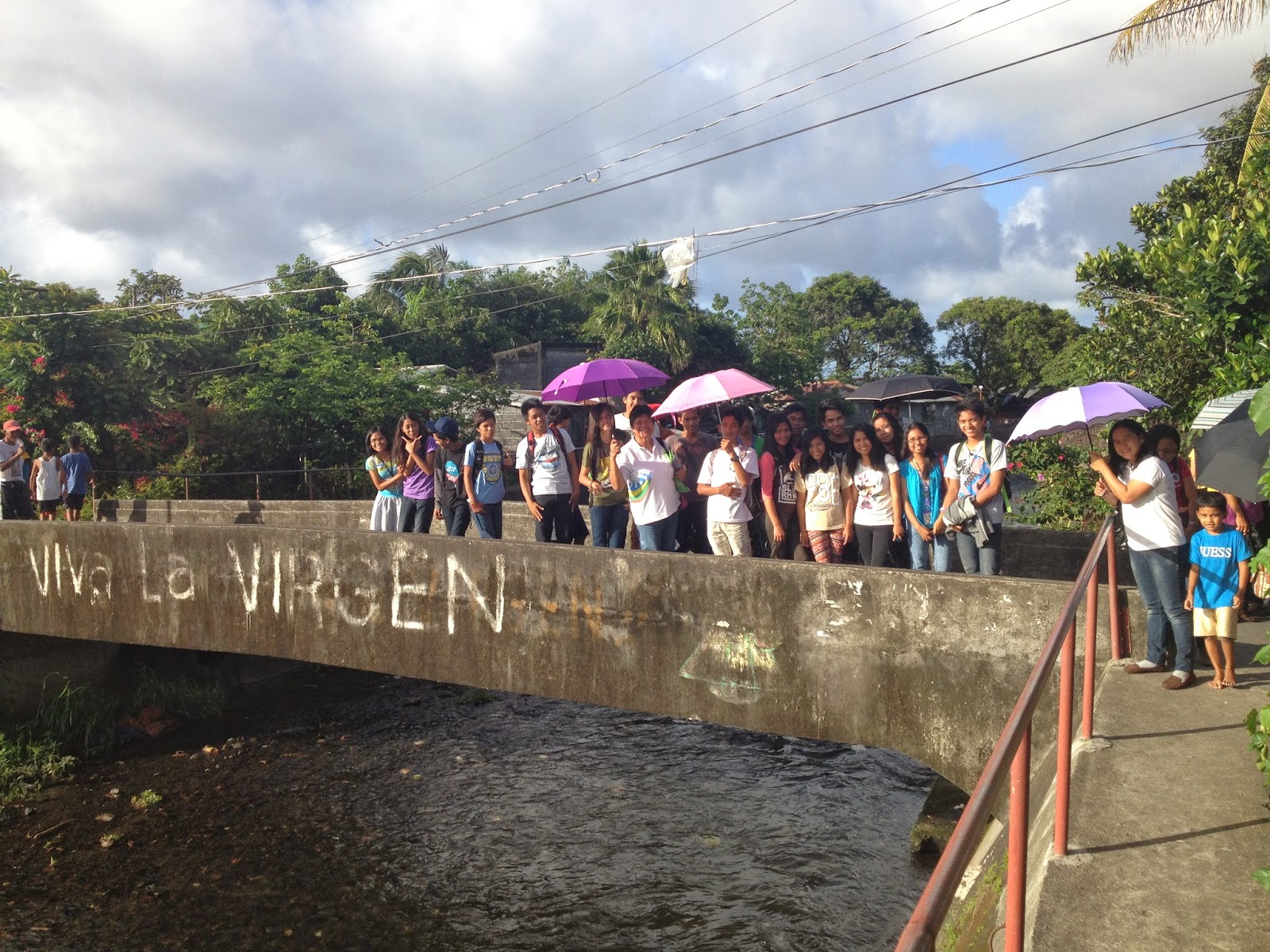
BUTC students and faculty during our Bombon River walk
I have been extremely excited about this program for a while (on top of it being one of my larger PC projects, it will also be the focus of my Master's internship; killing two birds with one stone!) so to see it coming together is incredibly rewarding. Staying grounded is key though, particularly due to the constant changes in our program structure. With every project here, sustainability is on my mind. Will this last after I'm gone? So far, there has been a lot of enthusiasm and support from both BUTC and the LGU for Save the Rivers, Save the Sea, and my fellow counterparts seem dedicated to continue the program after I leave. Knowing this eases my mind a bit. But that doesn't allow me to "sit the next few plays out." Instead, it motivates me to continue to help put the pieces in place and give them the tools for lasting success. I have high hopes for this program. Stay tuned.
For more information and project updates, please check out and "like" our Facebook page: https://www.facebook.com/savetheriverssavethesea.
Thursday, March 6, 2014
More people more happiness
Or so said my new found Chinese friend as I enjoyed a hot cup of oolong tea in the friendly confines of a Chinese teahouse, so eloquently placed down the side corridor in one of Shanghai's bustling malls. Was this one of these scams we kept hearing about? Too curious to say no 10 minutes prior, this was the scene Russ and I found ourselves in on our third day in China.
Having a very gracious cousin on this side of the world afforded me the opportunity to skip over to Shanghai for Chinese New Year (CNY) last month. Completely unaware of what to expect, I was both pleasantly surprised and rudely awakened by Chinese history, culture, and customs. Let me explain.
**It should be noted that 9 days in China is nothing. Barely scratching the surface. The entirety of my time was spent in Shanghai (and the water village Zhujiajiao for a day) and my opinions reflect that. It is not fair of me to generalize the country as a whole because Shanghai is not representative of everything that is China.

Pros
- Food: Holy momma! The Chinese do it up right. Sure, you have to be careful what and where you are eating (don't want no rat meat in your soup), but most of the time I found the street vendors to be legit, serving up steaming hot dumplings and noodles. Russ and I took down almost 150 dumplings combined. Funny piece of trivia: Chinese people have no clue what "American chinese food" is. There is one restaurant in Shanghai that serves "ACF" called Fortune Cookie and the majority of its customers (I was told) are expats.

- Transportation: The subway system in Shanghai is incredibly clean and efficient. Everything is written in Chinese characters as well as English. The trains are affordable. And they connect you to virtually every part of the city. Having spent my last year and a half riding around on buses, tricycles, and jeepneys, this was a real treat!

- Buddhism: We were really hoping to get more acquainted with Buddhist teachings and customs while in China. Our new local friend Kangming showed us around for two days and provided some great insight as we wander through the Yu Yuan Gardens Buddhist temple.

- Chinese history and propaganda: For me, this was the best part of the trip. Russ' friend Cadence had mentioned that we check out the propaganda museum in the French Concession, noting that it is "a little hard to find." After initially walking past it, we walked up to a series of 1980s apartment buildings where the security guard promptly handed us a business card with directions on it. Directions to the museum. 3rd building, take the elevator to the basement. Sketchy? Awaiting for us was a collection of propaganda posters from 1949-1990s. It was incredible to view these pieces of history, particularly those with anti-American sentiments. And once again, having Kangming there allowed us to connect the historical pieces into one timeline.
- Craft beer: This one appropriately goes out to Tracy and Chris. Without them, we would never have found Boxing Cat Brewery, where we indulged on some fine craft brews with dinner. Been too long. Far too many Red Horses have come between me and a delectable Pale Ale.
Cons
- Hospitality: Apart from Kangming and Cadence, our teahouse companions and our entertaining foot masseuses, I was very turned off by the locals we encountered as we toured the city. Everyone seemed in a rush. Pushing and shoving people out of the way. In the streets, in the restaurant, on the subway. And few were inclined to assist us in our travels.
- Language: Both a pro and a con, this one closely coincides with hospitality. My Mandarin from college slowly came back to me throughout the trip, but my pronunciation was still rusty. Despite my best efforts, many people were reluctant to assist/correct us, often leading to mix-ups. It was surprising and at times agitating to know that such little English was spoken. But at the same time, it was great to see Chinese people completely comfortable and independent linguistically from the Western world. Russ and I were put in some very uncomfortable, yet humorous situations. Spending time in a country with little to no English tests your own comfortability and forces you to let go, trust yourself, and dive into different customs in order to get by.
China was a great reprieve at a great time. Great food. Wonderful lodging and accommodations (thank you Tracy and Chris!). Cold weather (I know I know, but for me, 40 degrees F is cold). But most importantly, it brought me back to the reasons why I love the Philippines. And with 7 months left, it's nice to take the time to reflect back on the countless life changes and experiences I've had. Here's to the home stretch!
Work updates to come soon...
Having a very gracious cousin on this side of the world afforded me the opportunity to skip over to Shanghai for Chinese New Year (CNY) last month. Completely unaware of what to expect, I was both pleasantly surprised and rudely awakened by Chinese history, culture, and customs. Let me explain.
**It should be noted that 9 days in China is nothing. Barely scratching the surface. The entirety of my time was spent in Shanghai (and the water village Zhujiajiao for a day) and my opinions reflect that. It is not fair of me to generalize the country as a whole because Shanghai is not representative of everything that is China.
Shanghai skyline (Financial district on the L, the Bund on the R)
Pros
- Food: Holy momma! The Chinese do it up right. Sure, you have to be careful what and where you are eating (don't want no rat meat in your soup), but most of the time I found the street vendors to be legit, serving up steaming hot dumplings and noodles. Russ and I took down almost 150 dumplings combined. Funny piece of trivia: Chinese people have no clue what "American chinese food" is. There is one restaurant in Shanghai that serves "ACF" called Fortune Cookie and the majority of its customers (I was told) are expats.
Russ scarfing down a dumpling
- Transportation: The subway system in Shanghai is incredibly clean and efficient. Everything is written in Chinese characters as well as English. The trains are affordable. And they connect you to virtually every part of the city. Having spent my last year and a half riding around on buses, tricycles, and jeepneys, this was a real treat!
- Buddhism: We were really hoping to get more acquainted with Buddhist teachings and customs while in China. Our new local friend Kangming showed us around for two days and provided some great insight as we wander through the Yu Yuan Gardens Buddhist temple.
Big Buddha statue in Yu Yuan Gardens temple
- Chinese history and propaganda: For me, this was the best part of the trip. Russ' friend Cadence had mentioned that we check out the propaganda museum in the French Concession, noting that it is "a little hard to find." After initially walking past it, we walked up to a series of 1980s apartment buildings where the security guard promptly handed us a business card with directions on it. Directions to the museum. 3rd building, take the elevator to the basement. Sketchy? Awaiting for us was a collection of propaganda posters from 1949-1990s. It was incredible to view these pieces of history, particularly those with anti-American sentiments. And once again, having Kangming there allowed us to connect the historical pieces into one timeline.
- Craft beer: This one appropriately goes out to Tracy and Chris. Without them, we would never have found Boxing Cat Brewery, where we indulged on some fine craft brews with dinner. Been too long. Far too many Red Horses have come between me and a delectable Pale Ale.
Cons
- Hospitality: Apart from Kangming and Cadence, our teahouse companions and our entertaining foot masseuses, I was very turned off by the locals we encountered as we toured the city. Everyone seemed in a rush. Pushing and shoving people out of the way. In the streets, in the restaurant, on the subway. And few were inclined to assist us in our travels.
- Language: Both a pro and a con, this one closely coincides with hospitality. My Mandarin from college slowly came back to me throughout the trip, but my pronunciation was still rusty. Despite my best efforts, many people were reluctant to assist/correct us, often leading to mix-ups. It was surprising and at times agitating to know that such little English was spoken. But at the same time, it was great to see Chinese people completely comfortable and independent linguistically from the Western world. Russ and I were put in some very uncomfortable, yet humorous situations. Spending time in a country with little to no English tests your own comfortability and forces you to let go, trust yourself, and dive into different customs in order to get by.
China was a great reprieve at a great time. Great food. Wonderful lodging and accommodations (thank you Tracy and Chris!). Cold weather (I know I know, but for me, 40 degrees F is cold). But most importantly, it brought me back to the reasons why I love the Philippines. And with 7 months left, it's nice to take the time to reflect back on the countless life changes and experiences I've had. Here's to the home stretch!
Work updates to come soon...
Wednesday, December 18, 2013
Journal entry
Along with this blog, I started a journal for myself when I began my Peace Corps journey last July. It started off as a daily monitoring of my happenings, before going on hiatus when dengue hit me (knock on wood; don't want round two to strike) last August. But I picked it back up again after arriving in Tabaco. The journal is a bit more raw now; a way for me to jot down something important or a thought that visits my brain. No longer an everyday occurrence. It presently sits at a whopping 49 pages (with 9 more months to go!).
I normally like to keep journal entry's to myself, using this blog as a way to expand and share various topics. But I feel compelled to share a recent entry. Background: this entry was drafted up after a previous conversation with a few other PC volunteers the night before Typhoon Haiyan struck.
November 26, 2013 - One
thought that I just remember I stated a few weeks back the night of the typhoon (not at all related but nonetheless important): “eras” or “ages” come and go without us even
realizing it. Looking back
on history, how many people actually realized what was happening when it was
happening? Like the environmental movement in the 60s. Or even previous World Wars. Or a
presidential assassination. We never know exactly how our lives are going to
pan out and how the little things we see on the news or throughout our day
could end up impacting our world much farther down the line. Even something
like music. How much it has changed since I was a teenager. And how my tastes
and preferences have changed with what happens around me. So how do we
attribute the world around us to our likes and dislikes? Our passions and
desires? Are we wearing masks all the time? Are we just going with the trends,
afraid to partake in a paradigm shift? Or are we contributing to that change
and are the trendsetters ourselves? Bottomline, there are so many external
influences that subconsciously influence who we are and who we become. But
staying true to your personal attributes and really knowing yourself is the
most important thing you can do to differentiate and blaze new trails in a world driven by a competitive lust.
Thursday, December 12, 2013
Lost in translation
I have been blessed with the ability to pick up foreign languages quickly. But to be fair, I'm not the greatest at staying motivated for retention purposes. I guess I'd like to think of myself as more of an experiential learner these days. Learning on the fly, out in the world, instead of hunched over a textbook or dictionary. And language is one of the best areas of study for this. I can walk around my city and have constant interaction. There is always someone new around, either a group of young kids walking to school or an elderly woman washing clothes. They are always mesmerized by the fact that I can converse with them in their own language (I'm fairly adept in Tagalog and have picked up a bit of the regional dialect Bicol-Albay from locals). The problem I have is that despite my persistence with Tagalog, a majority of these conversations always resort back to English.
I have asked myself over and over again, "why is this?" American influence back in the early 20th Century? English taught in schools? Their perceptions of me as an English-speaking westerner? Translation problems? Sure, all of these play a role. But when it comes down to it, English is commonly seen as a universal language in our world today (although not by all countries). It's also a way for them to practice their skills, and for many, as a means to a better life.
And we help facilitate this. Through media. Through everyday interactions. And through acknowledging that everyone we meet probably knows at least a few basic words. This is generally true in the US, but when I joined Peace Corps, I anticipated that adopting a new language would be a top priority. However, the Philippines has a rich Americanized past, one which has integrated the English language firmly into its society. Sure, many of the people I work with, mainly impoverish fisherfolk, don't speak a lick. But others, including many of my coworkers, are very skilled. So much so that when I can't think of a word in Tagalog, I use the English equivalent and assume that my counterparts or community members understand me. Hell, half the time I hope that someone else will speak to me in English so my brain can take a rest.
My mental struggle is over the sense of pride identified with language. I have come to appreciate a part of this as many Filipinos have exclaimed to me, "it brings me so much joy to here you speak our language." They genuinely care when foreigners take the time to immerse themselves in their culture, in their life. Even when I was in Bali, the warm look on people's faces when you said suksma (thank you) shared so much of their internal gratitude.
Whether its me sharing a bit of English vocab with my host family or an exuberant friend enjoying a playful conversation with me in Tagalog, the satisfaction I can see on their faces is something I will always hold dear. And it certainly helps keep my experiential studies going ;) Language is quite a powerful tool.
I have asked myself over and over again, "why is this?" American influence back in the early 20th Century? English taught in schools? Their perceptions of me as an English-speaking westerner? Translation problems? Sure, all of these play a role. But when it comes down to it, English is commonly seen as a universal language in our world today (although not by all countries). It's also a way for them to practice their skills, and for many, as a means to a better life.
And we help facilitate this. Through media. Through everyday interactions. And through acknowledging that everyone we meet probably knows at least a few basic words. This is generally true in the US, but when I joined Peace Corps, I anticipated that adopting a new language would be a top priority. However, the Philippines has a rich Americanized past, one which has integrated the English language firmly into its society. Sure, many of the people I work with, mainly impoverish fisherfolk, don't speak a lick. But others, including many of my coworkers, are very skilled. So much so that when I can't think of a word in Tagalog, I use the English equivalent and assume that my counterparts or community members understand me. Hell, half the time I hope that someone else will speak to me in English so my brain can take a rest.
My mental struggle is over the sense of pride identified with language. I have come to appreciate a part of this as many Filipinos have exclaimed to me, "it brings me so much joy to here you speak our language." They genuinely care when foreigners take the time to immerse themselves in their culture, in their life. Even when I was in Bali, the warm look on people's faces when you said suksma (thank you) shared so much of their internal gratitude.
Whether its me sharing a bit of English vocab with my host family or an exuberant friend enjoying a playful conversation with me in Tagalog, the satisfaction I can see on their faces is something I will always hold dear. And it certainly helps keep my experiential studies going ;) Language is quite a powerful tool.
Monday, November 11, 2013
Survival
I struggled to find the words for this post as there have been so many emotions running through my head the past few days. Helplessness. Frustration. Sadness. Anxiety. Determination. Hope. Courage. Love.
As I stumbled out of my comfortable consolidation hotel Saturday morning, the Legazpi City landscape appeared unchanged. Minor agricultural damage. Trikes and jeepneys whizzing by. No sign of a catastrophic typhoon. I was thankful...and lucky. But as I began the hour trek north back home to Tabaco, I slowly began to feel the after effects of yet another natural disaster for this resilient country...

THE REALITY: the Philippines is a third world country with a predominantly coastal population and a diverse natural landscape. It acts as the first major land mass to receive tropical storms originating in the Pacific, one of the reasons why it commonly sees upwards of 20 storms/typhoons per year. These are only getting worse with climate change (i.e. Typhoon Haiyan this year and Typhoon Bopha last year). Additionally, the country's location in the Pacific ring of fire leaves it vulnerable to earthquakes (seen last month) and volcanic eruptions (seen earlier this year). The poverty distribution is extreme, not to mention the lack of resources available. And despite the resourcefulness of Filipinos, many are unable to afford quality housing and supplies, leading to the poor infrastructure we see. All of this contributes to the devastation seen last weekend, particularly in the Eastern Visayan islands of Samar and Leyte, two of the country's poorest islands.

The grim reality of this monster is unfolding as I type. The worst is over, but Yolanda/Haiyan unleashed an assault on the Central Visayan islands of Leyte, Samar, Cebu, Negros, and Panay. I'm thankful that all PC volunteers are now safe and accounted for. Unfortunately, I cannot say the same for some of the communities they left behind. Homes are destroyed. Thousands are dead. And survivors are wandering the streets in search of food, water, clothing, and shelter. And we call them crazy for looting? They're just trying to survive.
Natural disasters are common occurrences worldwide, and they seem almost inescapable since I've been living here in the Philippines. I understand the position of many of you, trying to grasp the severity of this from overseas. I was in the same predicament last year, witnessing the destruction of Hurricane Sandy and the Midwestern tornadoes. Sadly, much is still unknown about this calamity since internal communication networks have been damaged, thereby slowing information dissemination and relief efforts.
As much as I have come to understand the importance of religion in the Philippines, prayers are no longer enough. Action must be taken. Relief organizations have been extremely active thus far, preparing supplies and personnel to send to affected regions. Small donations can go along way here, so please take the time to support this amazing country and its beautiful, strong-willed people.
As I stumbled out of my comfortable consolidation hotel Saturday morning, the Legazpi City landscape appeared unchanged. Minor agricultural damage. Trikes and jeepneys whizzing by. No sign of a catastrophic typhoon. I was thankful...and lucky. But as I began the hour trek north back home to Tabaco, I slowly began to feel the after effects of yet another natural disaster for this resilient country...

The top placemark indicates the location of my site. The bottom the location of Tacloban City, Leyte, one of the hardest hit areas. Although the typhoon stretched across 2/3 of the country, it was fairly centralized as the most severe damage was confined to those central islands.
 The path of typhoon Yolanda/Haiyan and the wind speeds experienced throughout the Philippines. Sources: Joint Typhoon Warning Center; National Centers for Environmental Prediction; National Statistical Coordination Board, Philippines; General Statistics Office Of Vietnam.

THE REALITY: the Philippines is a third world country with a predominantly coastal population and a diverse natural landscape. It acts as the first major land mass to receive tropical storms originating in the Pacific, one of the reasons why it commonly sees upwards of 20 storms/typhoons per year. These are only getting worse with climate change (i.e. Typhoon Haiyan this year and Typhoon Bopha last year). Additionally, the country's location in the Pacific ring of fire leaves it vulnerable to earthquakes (seen last month) and volcanic eruptions (seen earlier this year). The poverty distribution is extreme, not to mention the lack of resources available. And despite the resourcefulness of Filipinos, many are unable to afford quality housing and supplies, leading to the poor infrastructure we see. All of this contributes to the devastation seen last weekend, particularly in the Eastern Visayan islands of Samar and Leyte, two of the country's poorest islands.

A typical nipa hut made out of bamboo and nipa fronds. Many houses, particularly those in rural, coastal areas, are made of these materials. While beautiful, they are extremely vulnerable, especially when up against hurricane force winds.
The grim reality of this monster is unfolding as I type. The worst is over, but Yolanda/Haiyan unleashed an assault on the Central Visayan islands of Leyte, Samar, Cebu, Negros, and Panay. I'm thankful that all PC volunteers are now safe and accounted for. Unfortunately, I cannot say the same for some of the communities they left behind. Homes are destroyed. Thousands are dead. And survivors are wandering the streets in search of food, water, clothing, and shelter. And we call them crazy for looting? They're just trying to survive.
Natural disasters are common occurrences worldwide, and they seem almost inescapable since I've been living here in the Philippines. I understand the position of many of you, trying to grasp the severity of this from overseas. I was in the same predicament last year, witnessing the destruction of Hurricane Sandy and the Midwestern tornadoes. Sadly, much is still unknown about this calamity since internal communication networks have been damaged, thereby slowing information dissemination and relief efforts.
As much as I have come to understand the importance of religion in the Philippines, prayers are no longer enough. Action must be taken. Relief organizations have been extremely active thus far, preparing supplies and personnel to send to affected regions. Small donations can go along way here, so please take the time to support this amazing country and its beautiful, strong-willed people.
Wednesday, October 30, 2013
Break muna
Destination: Bali, Indonesia.
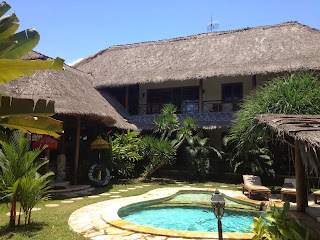


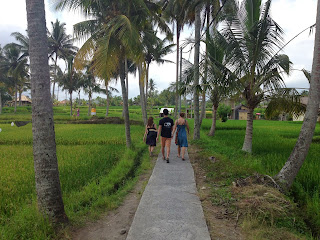


It's always nice to have a trip lined up as a Peace Corps volunteer. Something to look forward to on those dog days at site. I had been looking forward to this trip since a group of us started planning it in June, and on October 12, it finally arrived.
7 days. 8 Peace Corps volunteers. 2 hospitable parents. 1 villa.
2 days scuba diving. 3 days surfing. 1 day of art and culture. 1 candy land power hour.
PHEnommmenal food. Shark, turtle, and cuttlefish spottings. A WWI wreck dive. An epic wave (to which I got destroyed).
Balinese pants. A camel strip tease. A waterslide beer bong. And NO RAIN (I say this with enthusiasm since coming from the Philippines, this was truly a blessing).
I was originally searching for a laid back, chill vacation. Something different from what we experienced last New Years. As our numbers increased, the more I thought this idea was a mere fantasy. But this trip wouldn't have been the same without our cohesive group. It offered everyone something different and in the end, everyone got out of it exactly what they needed. For me, it was that timeout from my "routine." A break muna as we say in the Philippines. A chance to remove myself from the life I had been accustomed to for the past year.
As I sat around the dinner table my last night in Bali with my two friends Josh and Dan, we discussed this break muna and how this trip became more than we had ever anticipated. And at the perfect time. The following week was our MST conference, where our entire batch gathered to reflect and share on the past year and look ahead to our next one.
For me, Bali set the tone for my MST and for my year ahead. My last one as a Peace Corps volunteer. Sure I wanted the time away to escape and in a way, to be reacquainted with western life. But it ultimately ended up being the opposite. Bali became more than a break muna, and reminded me that there is still so much more out there. More people to meet. More places to explore. More culture to soak up. In the Philippines and beyond.

Our home for the week. Not too shabby thanks to Tito and Tita Crow

The civet; its poop makes the world's most expensive coffee

Jeff and our tour guide Wayan enjoying the civet coffee. Wayan wasn't a big fan

Rachael, Russ, and Melissa (L-R) enjoying a nice stroll through the rice fields to our lunch spot, Sari Organic

Waiting for the smoke to clear??

A Balinese temple in Ubud

The Monkey Forest in Ubud. How many can you spot?
Friday, October 11, 2013
Routines
It’s very easy to fall into the day-in, day-out patterns of
our busy lives. Wake up and grab a quick bite to eat before heading off to work
or class, only to return to your home in the early evening. Maybe you mix it up
and grab dinner with a friend or catch happy hour with some coworkers. Or maybe
you hit the gym or go for a run before settling in for dinner, catch a
primetime TV show or lounge with a favorite book before heading to bed. Repeat.
I was enjoying the fact that my life in the Philippines
didn't lock me into a daily schedule. Constant nuances throughout my first year
here kept me on my toes and sparked my curiosity. But it seems the times have
finally caught up to me. Or maybe I have just caught up to the Philippines.
These past two months or so have flown by like no other,
partly because I have developed a daily routine. Or so I think. To briefly walk
you through…I typically wake up a little later these days (because my work
allows me to). Sometimes I work from home; other days I will head to my
Agriculture Office or the World Wildlife Fund office nearby. I work til 12
before heading home to have lunch prepared by my host family. Work concludes at
5, at which time I like to stop to grab pandesal (a bready wonder treat made by
gods) for my afternoon merienda (snack). I try and workout at my house before cooking
dinner for myself, then a little light reading or a TV show on my laptop before
hittin’ the hay. Again…repeat.
Now, are routines a be all and end all evil? Not at all. A
lot of times having a routine allows us to be incredibly efficient. Or provides
us with some stability or continuity. Some of my most productive work has
occurred in the past two months. I've designed four new proposals for upcoming
projects (including my internship proposal for my Master’s), helped update the
municipal fisherfolk database, and conducted several coastal cleanups in nearby
barangays. I've played in several local
basketball tournaments, and had a few leisurely weekends with other volunteers
and Filipinos. But for me looking back, it’s the feeling that that isn’t
enough. That I could still be doing more. More work, more social activities,
more cultural interaction.
Then I have a night like I did two weeks ago where you fully
grasp that impact of what you’re doing and the appreciation others have for it.
Once again, I was sharing my story as a Peace Corps volunteer. Why I am here, what I do, how I live, etc.
etc. The usual. This time with a bunch of basketball teammates after one of our
games. I was repeatedly asked, “So why are you here?” I explain. But then I
get, “So why are you STILL here?” I sat there a bit shocked because I had never
been asked that before. But it didn't take me long to respond. “Because I want
to be here. This is where I belong right now.” With that, my friends were
stunned. Just the look on their faces gave me the most overwhelming feeling of
humility, gratitude, and acceptance (I’m hoping it was that and not that we had
knocked back one too many San Mig Lights ;)).
It is these moments that make routines not so routine. And that
make ordinary days extraordinary.
Wednesday, July 31, 2013
Body art and beach cleanups
For those of you who do not have a Facebook account or have not yet heard about my most recent venture, I got inked. AKA my first tattoo. I drew the design up months ago, and my Filipino friend and local tattoo artist Nico produced the finished product.


Nico hard at work. No pain no gain

The finished product, slightly red and swollen
For me, the tattoo symbolizes spirituality, family, growth and maturity, the Philippines and Peace Corps, and my winding camino.
I was meaning to get the tattoo to mark my 1 year of service, but once again, July came and went before I knew it. Another month in the books. Hard to believe summer is dwindling down in the states and soon, kids will be heading back to school and snow will be on the ground (I know, I know...not what you want to think about right now. But I miss the snow!). With all the extreme weather I've heard about back home, the sporadic weather patterns have returned here in Bicol as well. Of course, that means rain. Thankfully, my new co-workers, counterparts, and I have been hard at work these past few weeks, allowing little downtime or boredom (except during brownouts :)) Today was the second of two coastal cleanups I have organized in local barangays this past week, and I recently received word that a third barangay is interested in having one in the upcoming weeks. These activities are great because they encourage community initiative and collaboration, while also promoting environmental awareness and solid waste management. Additionally, we will also be implementing the new municipal fisherfolk registration system (FishR) in Tabaco over the next few weeks. Feels good to be delegated more responsibility and given a chance to spearhead a lot of these activities. My new counterparts at the NGO (WWF - World Wildlife Fund) and the LGU have been very supportive and motivated, a drastic change from a few months ago.
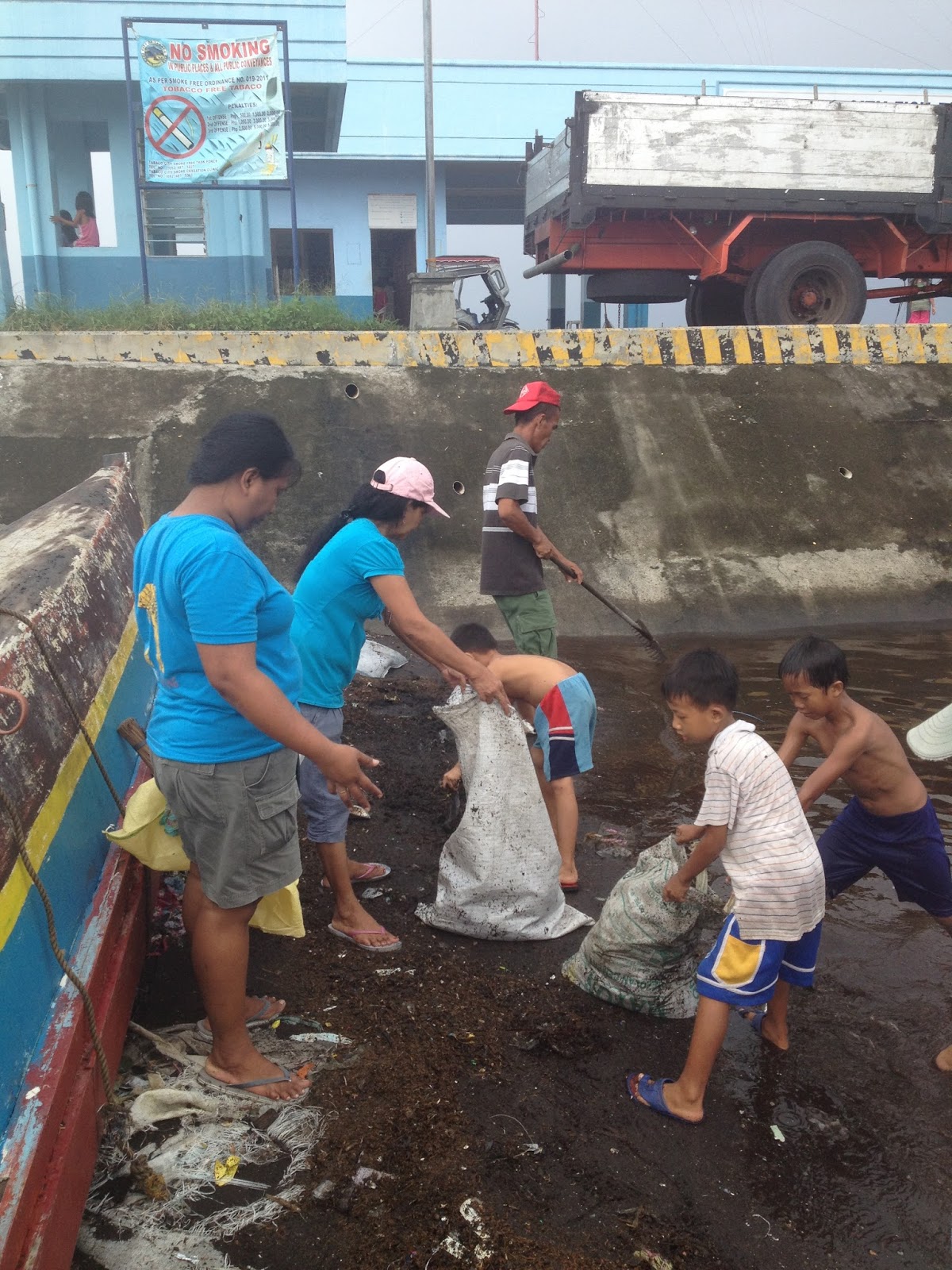
Kids love to join in and lend a helping hand

My new LGU counterpart Louie giving a post-cleanup talk to students from a barangay high school
With a new batch of volunteers here, I am no longer one of the "new kids on the block." I've heard that this portion of service (between the 1 year mark and Mid-Service Training in October) is often the hardest for volunteers because we have reached the 1 year mark, volunteers question their work and impact so far, and the attention is now off of us and on the new trainees. But personally, I couldn't be happier with where things are at right now (despite this multi-day brownout that we have going on right now...I'm currently tapping into a food court's electricity). I'll be heading back to my training site in Bataan this weekend with Russ to visit our old host families, while hoping to share some volunteer wisdom and positive vibes with the new CRMers!
My new favorite Tagalog word: swabe (pronounced swah-bay) = smooth
Saturday, July 27, 2013
An alternative space-time continuum (part two)
Squawking roosters. Barking dogs. Motorcycle engines. Claustrophobic jeepney and/or bus rides next to fighting cocks. Children playing with your hair (yes that means on your head, legs, and arms). Constant stares and glares, never loosing eye contact.
From a western perspective, privacy is seen as a right, not a privilege. An empty row of seats seems more appealing to us than one that is currently occupied by two strangers. Many people are afforded their own bedroom, instead of sharing one with other family members. Public transportation, such as buses and trains, aren't utilized as frequently as personal cars or taxis. All in all, we enjoy our personal space.
This was one of the biggest hurdles I had to overcome when I moved to the Philippines. And it is something that will never fully change. Filipinos are extremely welcoming and hospitable people, sometimes to a point where you think they are coming off rude (such as the "hey joe" references that I get on a daily basis, which refers to G.I. Joe's back in WWII when many Americans were stationed here). They go above and beyond to make sure that you are happy. The constant interaction was something I was not accustomed to. Maybe this is because Filipinos place an enormous value on family, to the point where you often see sons and daughters living with their parents well into their adult years and some even after they are married with children. Now, some may view this as being overprotective, etc. But Filipinos would only use one word to characterize this bond: love. They love and value their connections so much that they are willing to sacrifice their space to ensure the happiness of those around them. They don't care what is going on around them, who is rubbing against them at the supermarket or on the jeepney, or whether dogs are barking outside and keeping them up at night. Because lying right next to them or sharing a drink with them are those who are most important to them.
Three months ago, I moved out of my host family's home and into my own apartment. I wanted a little bit more space to myself and the opportunity to cook my own meals. But my new place is only 10 feet away from my host family. I didn't want to give up the valuable relationship I had with them by packing up my stuff and moving down the road. Over the course of my 8 months living with them, I learned the importance of sharing a wall.


I can now tune out the dogs and the roosters (the rain helps). Children play with my leg hair on the bus. These are just daily occurrences. Yes, sometimes they are frustrating. Yes, I need to be able to have some time for myself. But I've found that our interpersonal communications are just as important as our intrapersonal ones. And that venturing out of my comfort zone, affording myself less personal space, allows me to appreciate the environments and people around me on a greater level.
From a western perspective, privacy is seen as a right, not a privilege. An empty row of seats seems more appealing to us than one that is currently occupied by two strangers. Many people are afforded their own bedroom, instead of sharing one with other family members. Public transportation, such as buses and trains, aren't utilized as frequently as personal cars or taxis. All in all, we enjoy our personal space.
This was one of the biggest hurdles I had to overcome when I moved to the Philippines. And it is something that will never fully change. Filipinos are extremely welcoming and hospitable people, sometimes to a point where you think they are coming off rude (such as the "hey joe" references that I get on a daily basis, which refers to G.I. Joe's back in WWII when many Americans were stationed here). They go above and beyond to make sure that you are happy. The constant interaction was something I was not accustomed to. Maybe this is because Filipinos place an enormous value on family, to the point where you often see sons and daughters living with their parents well into their adult years and some even after they are married with children. Now, some may view this as being overprotective, etc. But Filipinos would only use one word to characterize this bond: love. They love and value their connections so much that they are willing to sacrifice their space to ensure the happiness of those around them. They don't care what is going on around them, who is rubbing against them at the supermarket or on the jeepney, or whether dogs are barking outside and keeping them up at night. Because lying right next to them or sharing a drink with them are those who are most important to them.
Three months ago, I moved out of my host family's home and into my own apartment. I wanted a little bit more space to myself and the opportunity to cook my own meals. But my new place is only 10 feet away from my host family. I didn't want to give up the valuable relationship I had with them by packing up my stuff and moving down the road. Over the course of my 8 months living with them, I learned the importance of sharing a wall.

Jeepney ride next to a fighting cock. You can see the tight quarters

My humble abode

View from my front door into my living room (to the right) and the kitchen in the back

My kitchen

CR (or "comfort room", AKA bathroom)

My bedroom upstairs

The basketball hoop I built for my host family for Christmas. Very pleased with my craftsmanship, but more pleased with the use the kids are giving it. They'll play well after the sun goes down!
I can now tune out the dogs and the roosters (the rain helps). Children play with my leg hair on the bus. These are just daily occurrences. Yes, sometimes they are frustrating. Yes, I need to be able to have some time for myself. But I've found that our interpersonal communications are just as important as our intrapersonal ones. And that venturing out of my comfort zone, affording myself less personal space, allows me to appreciate the environments and people around me on a greater level.
Subscribe to:
Posts (Atom)