Pages

Saturday, July 27, 2013

An alternative space-time continuum (part two)

Squawking roosters. Barking dogs. Motorcycle engines. Claustrophobic jeepney and/or bus rides next to fighting cocks. Children playing with your hair (yes that means on your head, legs, and arms). Constant stares and glares, never loosing eye contact.

From a western perspective, privacy is seen as a right, not a privilege. An empty row of seats seems more appealing to us than one that is currently occupied by two strangers. Many people are afforded their own bedroom, instead of sharing one with other family members. Public transportation, such as buses and trains, aren't utilized as frequently as personal cars or taxis. All in all, we enjoy our personal space.

This was one of the biggest hurdles I had to overcome when I moved to the Philippines. And it is something that will never fully change. Filipinos are extremely welcoming and hospitable people, sometimes to a point where you think they are coming off rude (such as the "hey joe" references that I get on a daily basis, which refers to G.I. Joe's back in WWII when many Americans were stationed here). They go above and beyond to make sure that you are happy. The constant interaction was something I was not accustomed to. Maybe this is because Filipinos place an enormous value on family, to the point where you often see sons and daughters living with their parents well into their adult years and some even after they are married with children. Now, some may view this as being overprotective, etc. But Filipinos would only use one word to characterize this bond: love. They love and value their connections so much that they are willing to sacrifice their space to ensure the happiness of those around them. They don't care what is going on around them, who is rubbing against them at the supermarket or on the jeepney, or whether dogs are barking outside and keeping them up at night. Because lying right next to them or sharing a drink with them are those who are most important to them.

Three months ago, I moved out of my host family's home and into my own apartment. I wanted a little bit more space to myself and the opportunity to cook my own meals. But my new place is only 10 feet away from my host family. I didn't want to give up the valuable relationship I had with them by packing up my stuff and moving down the road. Over the course of my 8 months living with them, I learned the importance of sharing a wall.

 Jeepney ride next to a fighting cock. You can see the tight quarters

 My humble abode

 View from my front door into my living room (to the right) and the kitchen in the back

My kitchen

CR (or "comfort room", AKA bathroom)

My bedroom upstairs

The basketball hoop I built for my host family for Christmas. Very pleased with my craftsmanship, but more pleased with the use the kids are giving it. They'll play well after the sun goes down!

I can now tune out the dogs and the roosters (the rain helps). Children play with my leg hair on the bus. These are just daily occurrences. Yes, sometimes they are frustrating. Yes, I need to be able to have some time for myself. But I've found that our interpersonal communications are just as important as our intrapersonal ones. And that venturing out of my comfort zone, affording myself less personal space, allows me to appreciate the environments and people around me on a greater level.


Monday, July 8, 2013

One year in

One year. So many moments and memories swirl through my head today as I look back on my timeline as a Peace Corps volunteer. Hopping off the plane at 11:30 PM after 16 hours of flying surrounded by 69 "strangers" I'd barely gotten to know. Two physically and mentally exhausting weeks spent at Initial Orientation in Cavite. Two and a half months of intensive training (language, culture, and technical) in the Bataan province. Swearing in as volunteers at the US Embassy. A 12 hour night bus ride to an unfamiliar landscape that I would call home for the next two years. Time and trips spent with new friends. An ever-changing work environment that leaves me speculating what my role will be for the next 15 months.

Within uncertainty lies the opportunity for growth. 

Reflection can be an extremely powerful and effective tool. Where has the past year gone? Where am I headed?  How have I grown mentally, emotionally, spiritually, socially? Do I like these changes?

I am a person whose mind over thinks and analyzes every situation, sometimes to a fault. All in all, I only need to ask myself one question: am I happy?

The answer to that is an overwhelming yes.

Thursday, June 6, 2013

An alternative space-time continuum (part one)

Alright folks, to quote Barney Stinson, Kenny Loggins, or my good friend Katelyn Anderson, daddy's back. I was on a brief blog hiatus due to some recent life events, most notably my parents' first visit to the Philippines! Their trip here was a great time for all of us to catch up, while proving to provide important satisfactions for both of us (besides getting to see each other!): for them - getting a chance to see my new life, where I live, where I work, my friends (both volunteer and filipino), my host family, and also visiting some unique sites here; and for me - getting to interact with Americans (other than other volunteers) for the first time in 10 months, our longest time apart in my life.

Reunited!

It truly amazes me how fast time has gone since I've arrived in Southeast Asia. When I look back at some of the events or activities I've been involved with during my time here, they feel like yesterday. Halloween. Mangrove plantings in Sorsogon. A weekend medical mission. New Years in Boracay. Solid Waste Management (SWM) IEC work with local university students. SCUBA certification. Aquaponics construction. Time has a different meaning to me each day though. Days can drag on, but the weeks usually fly by. As I type this, I am trying to fathom how 1 week of June is already over. It takes on a new meaning when I hear about the life of those of you back in the States (something I greatly appreciate as it helps me stay connected). Some of you are still in school, some maybe working part or full-time, balancing activities with family and friends, or a combination. All things I considered part of my life before, and to some extent still are..just in different ways. But now my calendar has a different structure, much different from the educational-based one I was used to. It is one I am continuously altering, but one that I am extremely content with because despite the "planner" in me, I am enjoying the freedom of not knowing what each day holds for me. It's those days that drive our greatest curiosity, surprise, laughter, adventure, and even heartache. But most importantly, they allow us to be real.

Time takes on a third meaning here in the Philippines. As I discussed in my last post, if its noon its lunchtime. If it's 5 pm at my host family's, its merienda time. That means drop what you are doing and eat. But this is not the case with everything. Many things here start much later (or not at all...). "Filipino time." A commonality most Filipinos would agree with but some take offense to. The reality that I have faced though is that if a meeting is schedule for 1 pm, it probably won't start until 2. If a basketball game is scheduled for 8 pm, tipoff will be at 9:30. Things are naturally pushed back, particularly those with an informal structure to begin with. I have even seen larger conferences starting an hour or two late because of participant or speaker delays. Punctuality is something we highly value in America, but often being "on time" in the Philippines means you're sitting around for an hour reading, texting, or sleeping. Still, meeting agendas and presentations usually manage to be accomplished within their allotted times. Alternative time management skills at their finest. The hardest part about "setbacks" like delays is the tendency to judge rather than to observe. Getting frustrated at the little things without seeing the bigger picture. This is a daily struggle.

A quick work update: election season concluded May 14 with my current mayor losing in a very close race. Her loss means that a majority of my office at the LGU will likely be terminated come July since they are job orders and not permanent positions. This includes my primary counterpart. Quite a few things are in limbo right now with the current mayor on her way out and the new mayor effective next month. Unfortunately, these changes have forced a sudden halt to some of the positive work we were doing at the Agriculture Office. I'm taking things in stride right now and thankful for my secondary work at Bicol University Tabaco Campus (BUTC), Tabaco National High School (TNHS), etc. keeping me active while our LGU changes take place.

And lastly, since I now have a computer again (thanks Mom and Dad), I thought I'd share a few more photos from the past few months:

Photo courtesy of PCV Kim

Photo courtesy of PCV Kim

SCUBA certification in Bohol (L-R: PCVs Laura, Josh, Russ, and me); photo courtesy of our dive instructor Jeremy

My counterpart Mark and I at Peace Corps PDM Training

Ali and I presenting some of our local work at a local CRM conference

Women's basketball clinic put on by Russ in Tinambac, Cam Sur

After Day 1 of aquaponics construction (ongoing)

Thursday, April 18, 2013

Culinary delights

I mentioned last time that I'd like to expand on some of the nuances of life here in the Philippines. So what better way to begin than by examining one of staples of Filipino culture: food.

Always around. Always plentiful. Sometimes expensive (fruits and vegetables depending on the season). Sometimes extremely cheap (breads and local snacks). 5 meals a day. That's right...5. Breakfast, morning merienda (snack), lunch, afternoon merienda, and dinner. And always on time...when home cooked. "Filipino time" usually causes activities and events to be pushed back. If a meeting is set to start at 8 AM, it likely won't begin til 9 or 10 when participants show up. This is NOT the case with eating. If it's noon it's lunchtime. 7 PM usually marks dinnertime at my house. I have tried toying with these (i.e. working til 1 PM before heading home for lunch), but that usually results in colder food since it probably has been sitting on the table waiting for me.

Bicol is known for its spicy food. Most dishes have "sili" chili peppers with them. Mmmmm masarap ("delicious" in tagalog; trademark phrase from PCV Russ). I've found, at least with home cooking, that there are really only 6-8 traditional dishes, all with interchangeable parts. Change in vegetables. Fish vs. pork vs. chicken. Different sauces. Fried vs. boiled vs. sauteed. This varies throughout the Philippines though and I'm sure some volunteers would disagree with me.

Another culinary term that I'll elaborate more on in a future post is palutan. These are snacks served while consuming alcohol. It could be anything from a bag of chips to sisig (see below) to a whole fried fish. Many restaurants or bars will even serve complimentary palutan when a bucket of beer is purchased.

Rice, or kanin, is served with every meal. And often meals cannot be eaten without rice being present. I've cut down on my rice intake (hence why my waistline has shrunk), but still find it necessary to have a small amount with every meal. Weird but I can't really eat ulam (the main dish besides the rice) without it.

Now for some specifics...

Other staple foods: fish, pork, chicken, beef (rarity), squash, eggplant, tomatoes, onions, mung beans, okra, carrots, mangos, bananas, pineapples, apples, papayas, and coconuts.

Native Philippine items: kamote (similar to a sweet potato), petchay (chinese cabbage), kangkong (water spinach), sili (hot chili peppers), ampalaya (bitter gourd), rambutan (sweet, "spiky" fruit), langka (jackfruit), durian (extremely smelly!), balimbing (star fruit), guyabano (soursops), kalamansi (philippine lime; MUCH better than regular limes and can be put with virtually anything; also goes very well with tequila), dalandan (green orange), bayabas (guava), lansones, and yellow watermelon.

And finally, some local delicacies that I have had the "privilege" of trying (I have made it a goal to try everything at least once here):
- balut = fertilized duck embryo eating in the egg shell (I recommend eating this with the lights off)
- dinuguan = pig intestines, lungs, kidneys, etc. in a sauce of pig blood, chili, and vinegar (very grainy texture; consume after slightly inebriated)
- sisig = parts of pig face mixed with chili, kalamansi, and sometimes egg (often a palutan; one of my favorites!)
- calabao = water buffalo (extremely fatty)
- bicol express = very spicy stew made with some type of meat (usually pork), lots of sili, and coconut milk
- lechon = roasted suckling pig

Still haven't had dog and don't plan to unless I'm tricked into it or it's placed in front on me...

I'm planning on experimenting more with these ingredients when I move to my new apartment next month. If you're interested, see if you can find any of these items in your local supermarket's (Wegmans) international section.

Sunday, April 7, 2013

Progress

Veterinarian. Architect. Photographer. Optometrist. Growing up, all of these crossed my mind at some point as potential career paths. I received my first veterinary book and look-a-like nutcracker as a Christmas gift way back in Penfield, probably when I was 9 or 10. I took a summer architecture course during high school, and I was locked into becoming an eye doctor up until Junior year of college. My own path, or, as this blog is appropriately titled, camino (a reference to the walk my Dad took almost 12 years ago), continually finds its way to add a new turn. I am no longer surprised, when I reflect back, to see the interesting situations I've gotten myself into here in the Philippines. They now seem like daily occurrences.

So it comes with no shock that I am now a certified SCUBA diver. Yes, this was not even on my radar screen two years ago. SCUBA diver? Andrew Wynne? You must be joking. The thought never crossed my mind...until I was assigned as a CRM volunteer in the Philippines. So here I was a month ago now observing an underwater paradise I'd only seen in dreams and the discovery channel. Couple that with one of the most pristine coral reef areas in the Philippines (Jagna, Bohol), 4 great friends, and some great Filipino food. Our last dive gave us the chance to observe a coral wall in a nearby MPA literally dropping off into an infinite abyss. After this past week, I have reached double digit dives. PC gave CRM volunteers the opportunity to become Reef Check certified, a tool that we can bring back to our communities in order to effectively manage, study and monitor the health of coral reefs. Mabini, Batangas, near the Verde Island Passage (one of the largest centers of biodiversity in the world), has been our home for the week.  On our third dive I was fortunate enough to see 2 SEA TURTLES, one green and one hawksbill!! Surreal experience. And such a relaxing activity. Unforeseen to fantasy to reality. I unfortunately do not have an underwater camera (yet...) but photos can be found on Facebook.

I checked another item off my new found bucket list in late February: swimming with whale sharks. Now, the name and the size (the whale shark is the largest living non-mammalian vertebrate) of these seemingly mythical giants is enough to discourage many from getting too close. But a bit more research with reveal them to be filter feeders, relying many on a diet of plankton. After spending 3 hours roaming the waters, our boat (myself, along with PCVs Russ, Dan, Chelsea, and Kathryn) started heading back to shore. My rash guard blew away in the breeze and our boat captain circled back to look for it...lost cause. Turned out to be a good omen though. While I lost my rash guard, our captain indicated that a whale shark had been spotted and we took off at full throttle. The experience was quite the adrenaline rush and much more intense than I anticipated. Our guide had us throw on our snorkel gear and on his signal jump in the water, throwing our faces into the deep as the "school bus" swam below. I say "school bus" because whale sharks can grow up to 40 feet long! The first one we spotted was smaller, maybe 20 feet, but as we again headed back to shore, our captain and guide spotted another one. Quite a lucky day! This time was even better since we were the only boat around. Russ, Dan, and I plunged back in with our guide, revealing a full grown whale shark 30 feet long! I felt like I could reach out and touch him, but after a few seconds he commenced our viewing by descending out of sight. The thrill on our guides face as we popped out of the water was amazing. Malaking malaki (very big) he yelled . He has been taking tourists our for over 20 years, yet he still gets a rush each day from sharing his environment with others.

Really quickly, let me return to my life at site as I have had some interesting developments these past few weeks. After returning from Bohol, the materials for my aquaponics project finally arrived!!!  I had been waiting for these for months now (not a surprise..), so it was a relief to be able to move forward with our plans. Continuing to keep my expectations low though. Just happy some progress has been made!  My office has a grain center and nursery set up in an upland barangay, so we are planning to construct the system there since it will be more feasible for daily monitoring. It is also the site of the future City Agriculture Office, which we hope will be finished by Christmas. I have also received some support from the local university, Bicol University Tabaco Campus (BUTC), for monitoring and evaluating the system after construction is completed.

Additionally, ideas have been flowing for my Master's thesis/internship. I am hoping to focus my work on city river restoration and management, specifically working with BUTC and the local SKs (sangguniang kabataan, or youth councils) to provide solid waste management options and reduce nutrient overload into the nearby marine environments (mangroves, coral reefs, etc.). Preliminary stage only right now. But this coming week is IST (In Service Training) for PC, part of which will focus on grant writing. Hoping to get some external funding for these projects. Crossing my fingers!

I'll wrap up this life update for now. Going to play basketball with some locals now before venturing up to another part of Batangas tomorrow for IST. Although we have all had our frustrating "moments" here, each day is filled with a new adventure(s), whether that be indulging in a new food, learning a new word, traveling to a new place (never knowing how long it will take). Planning on expanding on these cultural intricacies in future posts.

Hope winter is wrapping up for all you folks in the states. I'd love to share with you some of our dry season heat!

"I'm so happy that I am alive, in one piece and short. I am in a world of shit, yes. But I am alive.  And I am not afraid..."

Friday, February 15, 2013

The little things in life

The following was shared with me by a fellow CRM PCV here in the Philippines. It was written by a Returned Peace Corps Volunteer stationed in Cambodia, focusing on the ins and outs of life as a PCV. Don't think I could have said it better myself...

Dear Person Contemplating Joining Peace Corps,
I imagine that you’re at a transition point in your life. Perhaps you’ve just graduated, perhaps you’re going through a career change, perhaps you have an itch for something more that can’t be scratched. Whatever the reason, here you are: contemplating joining Peace Corps.
But should you? Is it right for you?
Honestly, you might not know that until you’ve arrived. You can research by reading books and official publications or by talking with current/returned volunteers, but everything you read and hear will probably tell you the same thing: every person’s experience is different. Your Peace Corps life will be uniquely shaped by your country, program, and site. 
I’d like to think, though, that there are a few things that are universal throughout the Peace Corps world, and those things tend all to revolve around how you yourself will change - for the better and for the worse - because of your time in Peace Corps.*
‘Sanitary’ will become an obsolete concept. You will eat on mats that you know are saturated in urine. You will prepare food on counters that also serve as chicken roosts. You will not have consistent/frequent access to soap. You will eat street food that is undoubtedly questionable. You will be dirty, dusty, and sweaty at all times. You will have mind over body battles to force yourself to bucket shower in the winter. Bugs, lizards, chickens, ducks, and mice will crap on everything. These things will be ok. You’ll adjust. The sterile environment of the States will become a distant odd memory or a constant fantasy.
Your body, though, might not adjust as quickly. You will have parasites and infections and illnesses that you had never heard of before training. You will be constantly constipated. Or go the opposite extreme. I hate to say it, but you will probably poop in your pants at least once. You will learn to vomit over a squat toilet and into a plastic bag during a bus ride. You will discuss your bodily functions openly and enthusiastically with other volunteers. No topic will be taboo.
The way you communicate will completely transform. Learning a language from scratch through immersion is a powerful experience. You will learn to have complex communications though expressions, gestures, and basic vocabulary. You will learn to bond with another human being through silence. You will answer the same basic questions over and over and over again. You may never achieve the ability to discuss ideas and concepts. You will develop a new English language which consists of pared down vocabulary and grammatical structures. You will actively think of each word before you speak. Your speech patterns will slow. You will have to define words whose meanings you had always taken for granted. You will learn to listen. 
Your concept of money will entirely alter. Paying more than $1 for anything will cause you to pause and question your purchase. You will understand value in the context of a different economic system. You will learn to barter, even on cheaper items. You will consistently feel as though you have been cheated on the price. You will be enraged by all prices upon returning to the States.
You will embrace the thrilling dichotomies of thrift versus splurge and ration versus binge. No one knows how to budget like a Peace Corps volunteer. And no one can binge like one.
You will be discontented with your work. You will wonder – and scream to the heavens – about the benefit of your presence. You will feel lost in unstructured expectations and crushed by promising ideas fallen to the side. Your expectations will fade into an unexpected reality. You will learn to celebrate small victories. You will look at mountains and see mole hills. You will try to tackle the impossible. Maybe you’ll succeed. Maybe you’ll just pick yourself up and take aim at another impossibility.
You will learn to do all of this through pure self-motivation. You will be the one to drag yourself out of bed and out the door. You won’t have anyone holding your hand or pushing your forward. Just you. You will become a stronger person for yourself, by yourself.
You will be a celebrity in your community. That status comes will hardships and benefits that will ineradicably change you. You will be the exception to the societal rules. You will be the foreigner, the one set apart. You will receive privileges and have special attention/status because of your nationality. You will always have eyes on you. You will have joined as an agent of culture exchange and understanding, but you will still find yourself falling into an ‘us versus them’ mentality. Use it. Consider it. Contemplate the value we place on people because of arbitrary characteristics. You will come away from your experience more attune to your own merits, to those that are deserved and to those that are given.
Your culture of personal space, one that maybe you have always taken for granted, will be challenged. You will wonder why you need an entire room to yourself while no one else even has a bed to himself. You still won’t want to give your room up. Privacy will be a privilege or a rarity, not a right.
You will lose all control of your emotions and be on an unpredictable roller coaster of extreme ups and downs. You will go from happy and confident to sullen and tearful by things as simple as ants in your candy or yet another child saying ‘Hello!’ Your highs will be high, but they will be fragile. Your lows will feel inescapable. Your family and friends in the States probably won’t understand this. Your isolation will force you to become your own support system. You will become aware of yourself in the context of solely being yourself.
Your government-issued friends will be your reprieve. The love and closeness you share with people back in the States won’t change, but it will be your fellow volunteers who understand. They will be friendships forged from necessity, and they will be deep and fervent.
You will witness a whole new way of life, and you will question your notion of necessity. You will consider your personal wealth, and people will constantly remind you of it. You will discover what your ‘needs’ are to live a productive, satisfied life. I hope you will remember that when you return to a culture of plenty.
You will be the biggest product of your Peace Corps work. You will change. And you will bring that change back with you.
*I insert a disclaimer: I believe the above assertions to be true for PC Cambodia, a program in its 6th generation of volunteers; I cannot speak with authority on other countries’ programs.

Ready to join?!

PC definitely isn't for everyone. We've joked since being here that you've gotta be a little bit "crazy" to do it. But what a thrill ride Sure it's been emotionally, physically, mentally, and even a bit spiritually challenging. There are days where I question my decision to join the Peace Corps, but then there are days that fully answer that same question. The best part is the little surprises, some unnoticeable until later, that creep into my day. I just finished constructing a basketball hoop for my host family (their Christmas present from me). Plywood, paint, and a rim. It has become a fixture in the neighborhood, bringing my neighbors together and getting them off the couch and outside. I was told the other day that my neighbor's eldest child was out playing ball. I had yet to meet him in my 5 months in Tabaco because he usually spent his days inside playing computer games. His parents were thrilled just to see him outside.

The complex world that we live in links together so many different systems...cultural, economic, ecological, social, etc. At many different scales. As we are currently discussing in my independent study at C of C (which you can read more about here: http://blogs.cofc.edu/resilience/), these interactions are often invisible to us at first glance. A farmer's cultivating practices could be contributing to the declining fish catch a fisherman is seeing, which in turn affects his daily life structure and the local economy, but also could lead to further environmental degradation that leaves the area vulnerable to future storms. Every decision we make is full of responses, some positive some negative.  So how can we make the most of our time by effectively seeing "the big picture" in order to better not only our own lives but of those around us as well? There isn't a simple answer to this question, but by picking up on these "little things," we might be making a bigger long-term difference, one beneficial for further generations. I probably won't see the change, if any, my basketball hoop has on my community. But at least I know I contributed to their happiness. And sometimes that's enough. If there is one thing my PC experience has taught me thus far, it's to appreciate these little things. That and bahala na.

Tuesday, February 5, 2013

Photo updates

From the past few months...

 Our finished product from the fiberglass boat making training, made from scratch

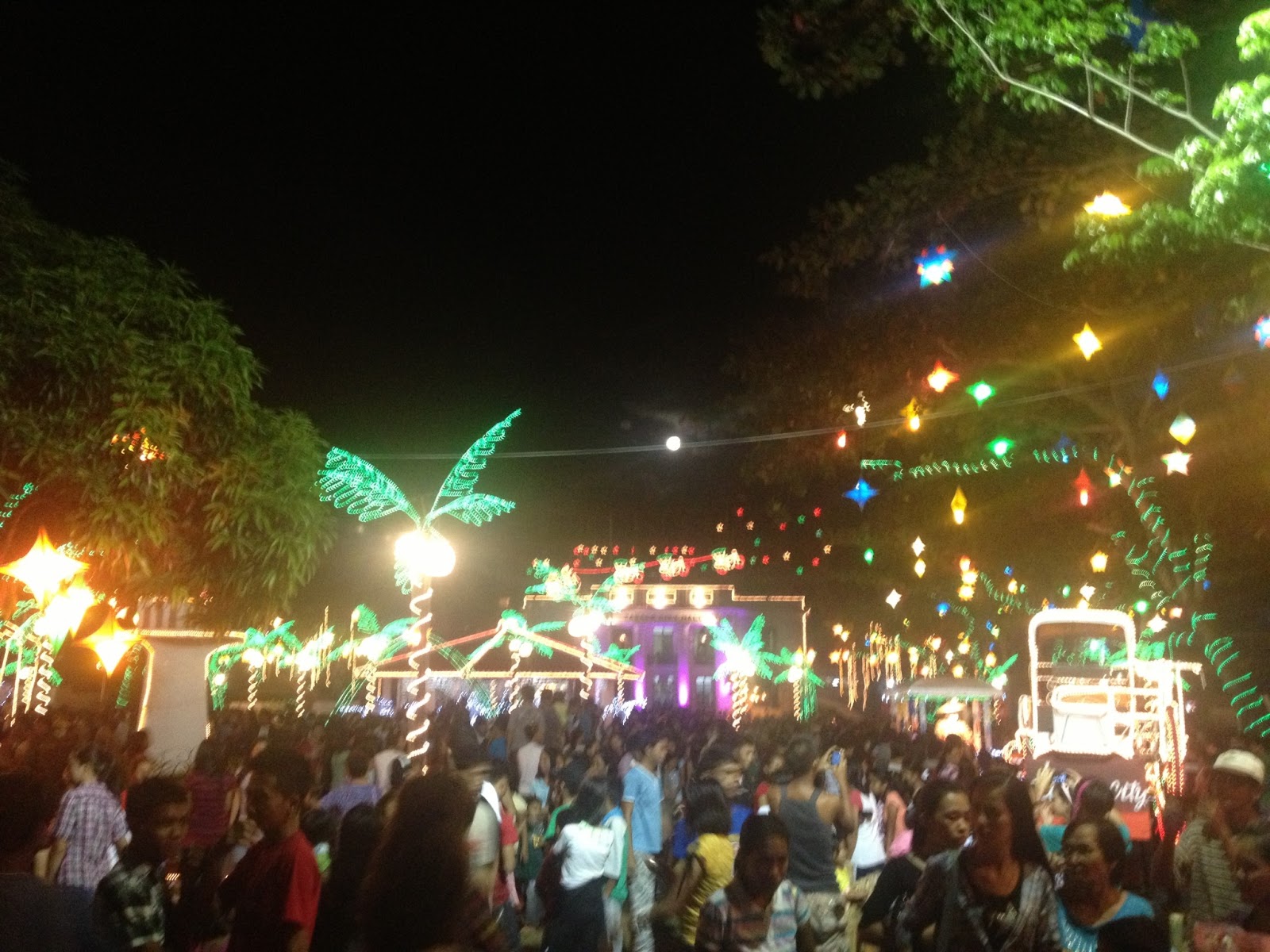
 Christmas time in Tabaco City

 Medical Mission in Sorsogon City with PCVs Dan, Laurenia, and Russ. Free medical and dental services provided to ~500 locals.

 My first surfing experience in Gubat, Sorsogon

Clear view of Mount Mayon from Legaspi City

 Our Boracay beach house view.  Is this real??

 A morning spent collecting mangrove propagules in a local barangay. Trash often collects in these areas from normal river flow, which can contribute to the deterioration of mangrove forests, a vital coastal habitat. 

360 degree view from the top of Mt. Manaet     

Just a friendly calabao (water buffalo)


Magellan's Cross in Cebu City

The Grand Parade at the Sinulog Festival in Cebu City

Also, if you're interested, I've included a link to my College of Charleston Independent Study blog on the right. This semester we are discussing the concept of resilience theory and how it applies to each of our environments. The blog was orchestrated by my professor as an informal way to share thoughts and experiences.

Enjoy!