Pages

Thursday, March 6, 2014

More people more happiness

Or so said my new found Chinese friend as I enjoyed a hot cup of oolong tea in the friendly confines of a Chinese teahouse, so eloquently placed down the side corridor in one of Shanghai's bustling malls. Was this one of these scams we kept hearing about? Too curious to say no 10 minutes prior, this was the scene Russ and I found ourselves in on our third day in China.

Having a very gracious cousin on this side of the world afforded me the opportunity to skip over to Shanghai for Chinese New Year (CNY) last month. Completely unaware of what to expect, I was both pleasantly surprised and rudely awakened by Chinese history, culture, and customs. Let me explain.

**It should be noted that 9 days in China is nothing. Barely scratching the surface. The entirety of my time was spent in Shanghai (and the water village Zhujiajiao for a day) and my opinions reflect that. It is not fair of me to generalize the country as a whole because Shanghai is not representative of everything that is China.

Shanghai skyline (Financial district on the L, the Bund on the R)

Pros
- Food: Holy momma! The Chinese do it up right. Sure, you have to be careful what and where you are eating (don't want no rat meat in your soup), but most of the time I found the street vendors to be legit, serving up steaming hot dumplings and noodles. Russ and I took down almost 150 dumplings combined. Funny piece of trivia: Chinese people have no clue what "American chinese food" is. There is one restaurant in Shanghai that serves "ACF" called Fortune Cookie and the majority of its customers (I was told) are expats.

Russ scarfing down a dumpling

- Transportation: The subway system in Shanghai is incredibly clean and efficient. Everything is written in Chinese characters as well as English. The trains are affordable. And they connect you to virtually every part of the city. Having spent my last year and a half riding around on buses, tricycles, and jeepneys, this was a real treat!


- Buddhism: We were really hoping to get more acquainted with Buddhist teachings and customs while in China. Our new local friend Kangming showed us around for two days and provided some great insight as we wander through the Yu Yuan Gardens Buddhist temple.

Big Buddha statue in Yu Yuan Gardens temple

- Chinese history and propaganda: For me, this was the best part of the trip. Russ' friend Cadence had mentioned that we check out the propaganda museum in the French Concession, noting that it is "a little hard to find." After initially walking past it, we walked up to a series of 1980s apartment buildings where the security guard promptly handed us a business card with directions on it. Directions to the museum. 3rd building, take the elevator to the basement. Sketchy? Awaiting for us was a collection of propaganda posters from 1949-1990s. It was incredible to view these pieces of history, particularly those with anti-American sentiments. And once again, having Kangming there allowed us to connect the historical pieces into one timeline.
- Craft beer: This one appropriately goes out to Tracy and Chris. Without them, we would never have found Boxing Cat Brewery, where we indulged on some fine craft brews with dinner. Been too long. Far too many Red Horses have come between me and a delectable Pale Ale.

Cons
- Hospitality: Apart from Kangming and Cadence, our teahouse companions and our entertaining foot masseuses, I was very turned off by the locals we encountered as we toured the city. Everyone seemed in a rush. Pushing and shoving people out of the way. In the streets, in the restaurant, on the subway. And few were inclined to assist us in our travels.
- Language: Both a pro and a con, this one closely coincides with hospitality. My Mandarin from college slowly came back to me throughout the trip, but my pronunciation was still rusty. Despite my best efforts, many people were reluctant to assist/correct us, often leading to mix-ups. It was surprising and at times agitating to know that such little English was spoken. But at the same time, it was great to see Chinese people completely comfortable and independent linguistically from the Western world. Russ and I were put in some very uncomfortable, yet humorous situations. Spending time in a country with little to no English tests your own comfortability and forces you to let go, trust yourself, and dive into different customs in order to get by.

China was a great reprieve at a great time. Great food. Wonderful lodging and accommodations (thank you Tracy and Chris!). Cold weather (I know I know, but for me, 40 degrees F is cold). But most importantly, it brought me back to the reasons why I love the Philippines. And with 7 months left, it's nice to take the time to reflect back on the countless life changes and experiences I've had. Here's to the home stretch!

Work updates to come soon...

Wednesday, December 18, 2013

Journal entry

Along with this blog, I started a journal for myself when I began my Peace Corps journey last July. It started off as a daily monitoring of my happenings, before going on hiatus when dengue hit me (knock on wood; don't want round two to strike) last August. But I picked it back up again after arriving in Tabaco. The journal is a bit more raw now; a way for me to jot down something important or a thought that visits my brain. No longer an everyday occurrence. It presently sits at a whopping 49 pages (with 9 more months to go!).

I normally like to keep journal entry's to myself, using this blog as a way to expand and share various topics. But I feel compelled to share a recent entry. Background: this entry was drafted up after a previous conversation with a few other PC volunteers the night before Typhoon Haiyan struck. 

November 26, 2013 - One thought that I just remember I stated a few weeks back the night of the typhoon (not at all related but nonetheless important): “eras” or “ages” come and go without us even realizing it. Looking back on history, how many people actually realized what was happening when it was happening? Like the environmental movement in the 60s. Or even previous World Wars. Or a presidential assassination. We never know exactly how our lives are going to pan out and how the little things we see on the news or throughout our day could end up impacting our world much farther down the line. Even something like music. How much it has changed since I was a teenager. And how my tastes and preferences have changed with what happens around me. So how do we attribute the world around us to our likes and dislikes? Our passions and desires? Are we wearing masks all the time? Are we just going with the trends, afraid to partake in a paradigm shift? Or are we contributing to that change and are the trendsetters ourselves? Bottomline, there are so many external influences that subconsciously influence who we are and who we become. But staying true to your personal attributes and really knowing yourself is the most important thing you can do to differentiate and blaze new trails in a world driven by a competitive lust.

Thursday, December 12, 2013

Lost in translation

I have been blessed with the ability to pick up foreign languages quickly. But to be fair, I'm not the greatest at staying motivated for retention purposes. I guess I'd like to think of myself as more of an experiential learner these days. Learning on the fly, out in the world, instead of hunched over a textbook or dictionary. And language is one of the best areas of study for this. I can walk around my city and have constant interaction. There is always someone new around, either a group of young kids walking to school or an elderly woman washing clothes. They are always mesmerized by the fact that I can converse with them in their own language (I'm fairly adept in Tagalog and have picked up a bit of the regional dialect Bicol-Albay from locals). The problem I have is that despite my persistence with Tagalog, a majority of these conversations always resort back to English.

I have asked myself over and over again, "why is this?" American influence back in the early 20th Century? English taught in schools? Their perceptions of me as an English-speaking westerner? Translation problems? Sure, all of these play a role. But when it comes down to it, English is commonly seen as a universal language in our world today (although not by all countries). It's also a way for them to practice their skills, and for many, as a means to a better life.

And we help facilitate this. Through media. Through everyday interactions. And through acknowledging that everyone we meet probably knows at least a few basic words. This is generally true in the US, but when I joined Peace Corps, I anticipated that adopting a new language would be a top priority. However, the Philippines has a rich Americanized past, one which has integrated the English language firmly into its society. Sure, many of the people I work with, mainly impoverish fisherfolk, don't speak a lick. But others, including many of my coworkers, are very skilled. So much so that when I can't think of a word in Tagalog, I use the English equivalent and assume that my counterparts or community members understand me. Hell, half the time I hope that someone else will speak to me in English so my brain can take a rest.

My mental struggle is over the sense of pride identified with language. I have come to appreciate a part of this as many Filipinos have exclaimed to me, "it brings me so much joy to here you speak our language." They genuinely care when foreigners take the time to immerse themselves in their culture, in their life. Even when I was in Bali, the warm look on people's faces when you said suksma (thank you) shared so much of their internal gratitude.

Whether its me sharing a bit of English vocab with my host family or an exuberant friend enjoying a playful conversation with me in Tagalog, the satisfaction I can see on their faces is something I will always hold dear. And it certainly helps keep my experiential studies going ;) Language is quite a powerful tool.

Monday, November 11, 2013

Survival

I struggled to find the words for this post as there have been so many emotions running through my head the past few days. Helplessness. Frustration. Sadness. Anxiety. Determination. Hope. Courage. Love.

As I stumbled out of my comfortable consolidation hotel Saturday morning, the Legazpi City landscape appeared unchanged. Minor agricultural damage. Trikes and jeepneys whizzing by. No sign of a catastrophic typhoon. I was thankful...and lucky. But as I began the hour trek north back home to Tabaco, I slowly began to feel the after effects of yet another natural disaster for this resilient country...

The top placemark indicates the location of my site. The bottom the location of Tacloban City, Leyte, one of the hardest hit areas. Although the typhoon stretched across 2/3 of the country, it was fairly centralized as the most severe damage was confined to those central islands.


The path of  typhoon Yolanda/Haiyan and the wind speeds experienced throughout the Philippines. Sources: Joint Typhoon Warning Center; National Centers for Environmental Prediction; National Statistical Coordination Board, Philippines; General Statistics Office Of Vietnam.

THE REALITY: the Philippines is a third world country with a predominantly coastal population and a diverse natural landscape. It acts as the first major land mass to receive tropical storms originating in the Pacific, one of the reasons why it commonly sees upwards of 20 storms/typhoons per year. These are only getting worse with climate change (i.e. Typhoon Haiyan this year and Typhoon Bopha last year). Additionally, the country's location in the Pacific ring of fire leaves it vulnerable to earthquakes (seen last month) and volcanic eruptions (seen earlier this year). The poverty distribution is extreme, not to mention the lack of resources available. And despite the resourcefulness of Filipinos, many are unable to afford quality housing and supplies, leading to the poor infrastructure we see. All of this contributes to the devastation seen last weekend, particularly in the Eastern Visayan islands of Samar and Leyte, two of the country's poorest islands.

A typical nipa hut made out of bamboo and nipa fronds. Many houses, particularly those in rural, coastal areas, are made of these materials. While beautiful, they are extremely vulnerable, especially when up against hurricane force winds.

The grim reality of this monster is unfolding as I type. The worst is over, but Yolanda/Haiyan unleashed an assault on the Central Visayan islands of Leyte, Samar, Cebu, Negros, and Panay. I'm thankful that all PC volunteers are now safe and accounted for. Unfortunately, I cannot say the same for some of the communities they left behind. Homes are destroyed. Thousands are dead. And survivors are wandering the streets in search of food, water, clothing, and shelter. And we call them crazy for looting? They're just trying to survive.

Natural disasters are common occurrences worldwide, and they seem almost inescapable since I've been living here in the Philippines. I understand the position of many of you, trying to grasp the severity of this from overseas. I was in the same predicament last year, witnessing the destruction of Hurricane Sandy and the Midwestern tornadoes. Sadly, much is still unknown about this calamity since internal communication networks have been damaged, thereby slowing information dissemination and relief efforts.

As much as I have come to understand the importance of religion in the Philippines, prayers are no longer enough. Action must be taken. Relief organizations have been extremely active thus far, preparing supplies and personnel to send to affected regions. Small donations can go along way here, so please take the time to support this amazing country and its beautiful, strong-willed people.


Wednesday, October 30, 2013

Break muna

Destination: Bali, Indonesia.

It's always nice to have a trip lined up as a Peace Corps volunteer. Something to look forward to on those dog days at site. I had been looking forward to this trip since a group of us started planning it in June, and on October 12, it finally arrived. 

7 days. 8 Peace Corps volunteers. 2 hospitable parents. 1 villa. 

2 days scuba diving. 3 days surfing. 1 day of art and culture. 1 candy land power hour. 

PHEnommmenal food. Shark, turtle, and cuttlefish spottings. A WWI wreck dive. An epic wave (to which I got destroyed). 

Balinese pants. A camel strip tease. A waterslide beer bong. And NO RAIN (I say this with enthusiasm since coming from the Philippines, this was truly a blessing). 

I was originally searching for a laid back, chill vacation. Something different from what we experienced last New Years. As our numbers increased, the more I thought this idea was a mere fantasy. But this trip wouldn't have been the same without our cohesive group. It offered everyone something different and in the end, everyone got out of it exactly what they needed. For me, it was that timeout from my "routine." A break muna as we say in the Philippines. A chance to remove myself from the life I had been accustomed to for the past year. 

As I sat around the dinner table my last night in Bali with my two friends Josh and Dan, we discussed this break muna and how this trip became more than we had ever anticipated. And at the perfect time. The following week was our MST conference, where our entire batch gathered to reflect and share on the past year and look ahead to our next one. 

For me, Bali set the tone for my MST and for my year ahead. My last one as a Peace Corps volunteer. Sure I wanted the time away to escape and in a way, to be reacquainted with western life. But it ultimately ended up being the opposite. Bali became more than a break muna, and reminded me that there is still so much more out there. More people to meet. More places to explore. More culture to soak up. In the Philippines and beyond.

 Our home for the week. Not too shabby thanks to Tito and Tita Crow

 The civet; its poop makes the world's most expensive coffee

 Jeff and our tour guide Wayan enjoying the civet coffee. Wayan wasn't a big fan

 Rachael, Russ, and Melissa (L-R) enjoying a nice stroll through the rice fields to our lunch spot, Sari Organic

 Waiting for the smoke to clear??

 A Balinese temple in Ubud

The Monkey Forest in Ubud. How many can you spot?

Friday, October 11, 2013

Routines

It’s very easy to fall into the day-in, day-out patterns of our busy lives. Wake up and grab a quick bite to eat before heading off to work or class, only to return to your home in the early evening. Maybe you mix it up and grab dinner with a friend or catch happy hour with some coworkers. Or maybe you hit the gym or go for a run before settling in for dinner, catch a primetime TV show or lounge with a favorite book before heading to bed. Repeat.

I was enjoying the fact that my life in the Philippines didn't lock me into a daily schedule. Constant nuances throughout my first year here kept me on my toes and sparked my curiosity. But it seems the times have finally caught up to me. Or maybe I have just caught up to the Philippines.

These past two months or so have flown by like no other, partly because I have developed a daily routine. Or so I think. To briefly walk you through…I typically wake up a little later these days (because my work allows me to). Sometimes I work from home; other days I will head to my Agriculture Office or the World Wildlife Fund office nearby. I work til 12 before heading home to have lunch prepared by my host family. Work concludes at 5, at which time I like to stop to grab pandesal (a bready wonder treat made by gods) for my afternoon merienda (snack). I try and workout at my house before cooking dinner for myself, then a little light reading or a TV show on my laptop before hittin’ the hay. Again…repeat.

Now, are routines a be all and end all evil? Not at all. A lot of times having a routine allows us to be incredibly efficient. Or provides us with some stability or continuity. Some of my most productive work has occurred in the past two months. I've designed four new proposals for upcoming projects (including my internship proposal for my Master’s), helped update the municipal fisherfolk database, and conducted several coastal cleanups in nearby barangays.  I've played in several local basketball tournaments, and had a few leisurely weekends with other volunteers and Filipinos. But for me looking back, it’s the feeling that that isn’t enough. That I could still be doing more. More work, more social activities, more cultural interaction.

Then I have a night like I did two weeks ago where you fully grasp that impact of what you’re doing and the appreciation others have for it. Once again, I was sharing my story as a Peace Corps volunteer.  Why I am here, what I do, how I live, etc. etc. The usual. This time with a bunch of basketball teammates after one of our games. I was repeatedly asked, “So why are you here?” I explain. But then I get, “So why are you STILL here?” I sat there a bit shocked because I had never been asked that before. But it didn't take me long to respond. “Because I want to be here. This is where I belong right now.” With that, my friends were stunned. Just the look on their faces gave me the most overwhelming feeling of humility, gratitude, and acceptance (I’m hoping it was that and not that we had knocked back one too many San Mig Lights ;)).

It is these moments that make routines not so routine. And that make ordinary days extraordinary.

I am now into my last 12 months of service. They say the time goes even faster now. Our daily routines always seem to make us say, “Jeez where did the time go?” I can guarantee I’ll be saying that when I COS (close of service) next year. Or years from now. “Wow my Peace Corps service is already over?!” Well…here’s to hoping I remember all those extraordinary days.

Wednesday, July 31, 2013

Body art and beach cleanups

For those of you who do not have a Facebook account or have not yet heard about my most recent venture, I got inked. AKA my first tattoo. I drew the design up months ago, and my Filipino friend and local tattoo artist Nico produced the finished product.

Nico hard at work. No pain no gain

The finished product, slightly red and swollen

For me, the tattoo symbolizes spirituality, family, growth and maturity, the Philippines and Peace Corps, and my winding camino. 

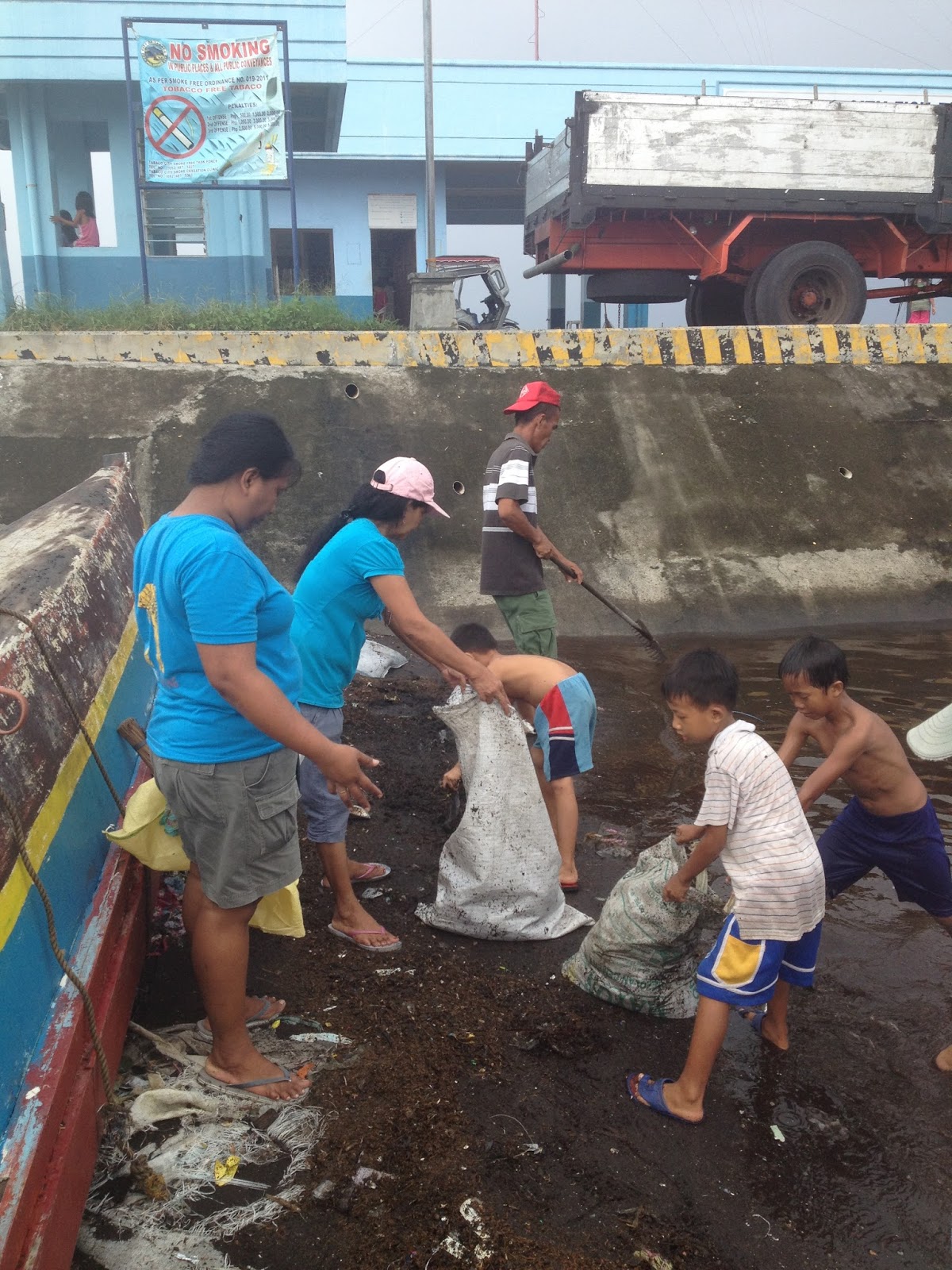
I was meaning to get the tattoo to mark my 1 year of service, but once again, July came and went before I knew it. Another month in the books. Hard to believe summer is dwindling down in the states and soon, kids will be heading back to school and snow will be on the ground (I know, I know...not what you want to think about right now. But I miss the snow!). With all the extreme weather I've heard about back home, the sporadic weather patterns have returned here in Bicol as well. Of course, that means rain. Thankfully, my new co-workers, counterparts, and I have been hard at work these past few weeks, allowing little downtime or boredom (except during brownouts :)) Today was the second of two coastal cleanups I have organized in local barangays this past week, and I recently received word that a third barangay is interested in having one in the upcoming weeks. These activities are great because they encourage community initiative and collaboration, while also promoting environmental awareness and solid waste management. Additionally, we will also be implementing the new municipal fisherfolk registration system (FishR) in Tabaco over the next few weeks. Feels good to be delegated more responsibility and given a chance to spearhead a lot of these activities. My new counterparts at the NGO (WWF - World Wildlife Fund) and the LGU have been very supportive and motivated, a drastic change from a few months ago.

Kids love to join in and lend a helping hand

My new LGU counterpart Louie giving a post-cleanup talk to students from a barangay high school

With a new batch of volunteers here, I am no longer one of the "new kids on the block." I've heard that this portion of service (between the 1 year mark and Mid-Service Training in October) is often the hardest for volunteers because we have reached the 1 year mark, volunteers question their work and impact so far, and the attention is now off of us and on the new trainees. But personally, I couldn't be happier with where things are at right now (despite this multi-day brownout that we have going on right now...I'm currently tapping into a food court's electricity). I'll be heading back to my training site in Bataan this weekend with Russ to visit our old host families, while hoping to share some volunteer wisdom and positive vibes with the new CRMers!

My new favorite Tagalog word: swabe (pronounced swah-bay) = smooth